




20 Nov, 2025
(edited)
2025-11-20 7:27:57 PM UTC
Edited by Trotter on 2025-11-20 7:33:36 PM UTC
Edited by Trotter on 2025-11-20 7:35:12 PM UTC
Edited by Trotter on 2025-11-20 7:37:43 PM UTC
Edited by Trotter on 2025-11-20 7:35:12 PM UTC
Edited by Trotter on 2025-11-20 7:37:43 PM UTC
2025-11-20 7:27:57 PM UTC
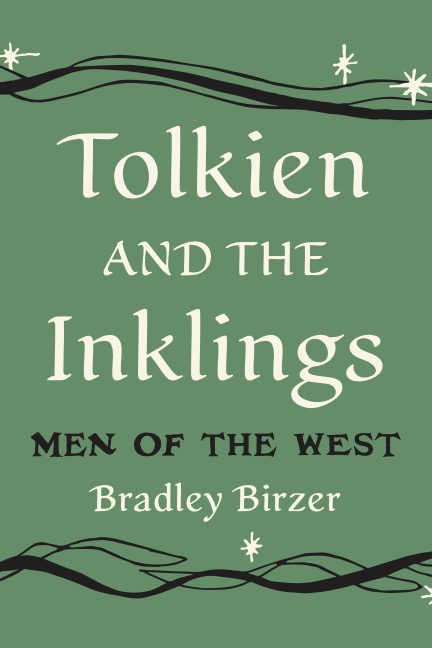
Bradley Birzer has announced his new book on Tolkien and the Inklings is forthcoming next year.
The Inklings were, to be sure, the most important literary group of the twentieth-century, rivaling and surpassing the much touted Bloomsbury Group. They influenced not just the direction of literature―especially through fantasy, science fiction, and biography―but the very direction of western civilization itself. It would not be too much of an exaggeration to note that former Communist countries rebelled using the language of the Inklings, but that the free west―from the United Kingdom to Italy to the United States―has been deeply influenced by the group as well. Though much has been written about the Inklings, almost all Inklings scholarship has revolved around the truly brilliant figure of C.S. Lewis. While Lewis was critical to the formation and maintenance of the group, he was not alone. In particular, J.R.R. Tolkien’s larger mythology, out of which The Hobbit, The Lord of the Rings, and The Silmarillion arose, informed the group, as did Owen Barfield’s path-breaking senior thesis at Oxford, Poetic Diction. As such, this book focuses on the Inklings from Tolkien’s point of view. As with Lewis, Barfield, Charles Williams, and Lord David Cecil, Tolkien wanted the group to serve as a bardic defense of western civilization, Socrates through Dante. Having fought in the trenches of World War I, the Inklings were more than aware of the fragility of civilization. They witnessed not just the first world war, but the rise of fascism, national socialism, and communism, as well as sent their sons off to fight World War II. Perhaps, just perhaps, myth and legend might reawaken the West to what it could be and to what it once aspired.The Inklings were, to be sure, the most important literary group of the twentieth-century, rivaling and surpassing the much touted Bloomsbury Group. They influenced not just the direction of literature―especially through fantasy, science fiction, and biography―but the very direction of western civilization itself. It would not be too much of an exaggeration to note that former Communist countries rebelled using the language of the Inklings, but that the free west―from the United Kingdom to Italy to the United States―has been deeply influenced by the group as well. Though much has been written about the Inklings, almost all Inklings scholarship has revolved around the truly brilliant figure of C.S. Lewis. While Lewis was critical to the formation and maintenance of the group, he was not alone. In particular, J.R.R. Tolkien’s larger mythology, out of which The Hobbit, The Lord of the Rings, and The Silmarillion arose, informed the group, as did Owen Barfield’s path-breaking senior thesis at Oxford, Poetic Diction. As such, this book focuses on the Inklings from Tolkien’s point of view. As with Lewis, Barfield, Charles Williams, and Lord David Cecil, Tolkien wanted the group to serve as a bardic defense of western civilization, Socrates through Dante. Having fought in the trenches of World War I, the Inklings were more than aware of the fragility of civilization. They witnessed not just the first world war, but the rise of fascism, national socialism, and communism, as well as sent their sons off to fight World War II. Perhaps, just perhaps, myth and legend might reawaken the West to what it could be and to what it once aspired.


zionius wrote:
Appears to be adopted from Tolkien ja Kalevala (2022) by the same author.
This book is being released as a paperback on January 30, 2026.


zionius wrote:
The Worlds of Christopher Tolkien, Nov 2025A celebration of J.R.R. Tolkien's son and literary executor, The Worlds of Christopher Tolkien sheds light on the worlds in which Christopher Tolkien lived and wrote for his centenary year, illuminated by essays from academics, colleagues, friends and family. Divided into three parts, the book covers Christopher’s role in publishing his father’s work, his work as a writer and artist himself, and finally essays from those who worked with him.Appears to be translated from Les Mondes de Christopher Tolkien
Has there been any updates for the English version? Can't find it anywhere.
Thanks!

31 Dec, 2025
(edited)
2025-12-31 4:41:57 PM UTC
Edited by EmilK on 2025-12-31 4:42:29 PM UTC
Edited by Trotter on 2026-2-8 7:01:01 AM UTC
Edited by Trotter on 2026-2-8 7:01:01 AM UTC
2025-12-31 4:41:57 PM UTC
Not sure if it has been mentioned, but it looks like "Middle-earth: From Script to Screen" by Falconer is getting a reprint (March 26, 2026)?
https://www.awin1.com/cread.php?awinmi ... Fvariant%3D32611676979278
512 pages, does it look like it is the same as the previous release?
https://www.awin1.com/cread.php?awinmi ... Fvariant%3D32611676979278
512 pages, does it look like it is the same as the previous release?

Preview: https://issuu.com/catholictruthsociety ... /a_light_from_the_shadows
According to the introduction, the sources for this book include unpublished manuscripts (presumably of LR).
18 February
(edited)
2026-2-18 4:30:54 PM UTC
Edited by Trotter on 2026-2-18 4:32:57 PM UTC
2026-2-18 4:30:54 PM UTC
The Inklings Detective Agency by John R. Kelly. Seems to be detective fiction in which the Inklings are the ones solving the mystery.
https://www.penguinrandomhouse.com/boo ... e-agency-by-john-r-kelly/
https://www.penguinrandomhouse.com/boo ... e-agency-by-john-r-kelly/
 61
61