



12

NEW ARTICLE
Tolkien's Proposed Translation of Old Norse Egilssaga
The picture that opens this article shows one of the many concept maps that I have the habit of creating when I study a topic. It's a way for me to keep track of the links I find during my searches.
As you can read, the map tells of my research not on the influence of Icelandic literature on Tolkien's work but on the relationship between Tolkien and Icelandic scholars.
I started researching this topic in 2019. Since then, I have been collecting findings and newspaper or magazine articles, and buying books, many of which signed and annotated by Tolkien's students such as Ursula Dronke (née Brown), who studied them when he was student of Tolkien, Cecilia Sisam, Gabriel and Joan Turville-Petre, Norman Davis, and Agnete Loth; and also by friends like Sigurður Nordal, Jacob Benedeiktsson, Jon Helgason, Benjamin Kristjansson, R. Priebsch, and Max Forster...
Tolkien's Proposed Translation of Old Norse Egilssaga


8 Jul, 2025
(edited)
2025-7-8 8:26:25 PM UTC
Edited by Tolkieniano on 2025-7-10 5:10:31 AM UTC
2025-7-8 8:26:25 PM UTC
Through the ongoing expansion of Tolkien’s Library: An Annotated Checklist, I did one particularly intriguing discovery centers on a limerick in Nevbosh language, linking Tolkien’s creative playfulness to the rich tradition of nonsense poetry popularized by Edward Lear and others. This finding raises fascinating questions about source influences... and the accuracy of Carpenter’s translation of Tolkien’s limerick in the Nevbosh language.
Tolkien and Nevbosh: A Tale of Limericks, Nonsense, and Literary Echoes
[Cover: Lear, Edward. The book of nonsense: with all the original pictures and verses. London/New York: F. Warne, 1902 p. 45.]
Tolkien and Nevbosh: A Tale of Limericks, Nonsense, and Literary Echoes
[Cover: Lear, Edward. The book of nonsense: with all the original pictures and verses. London/New York: F. Warne, 1902 p. 45.]
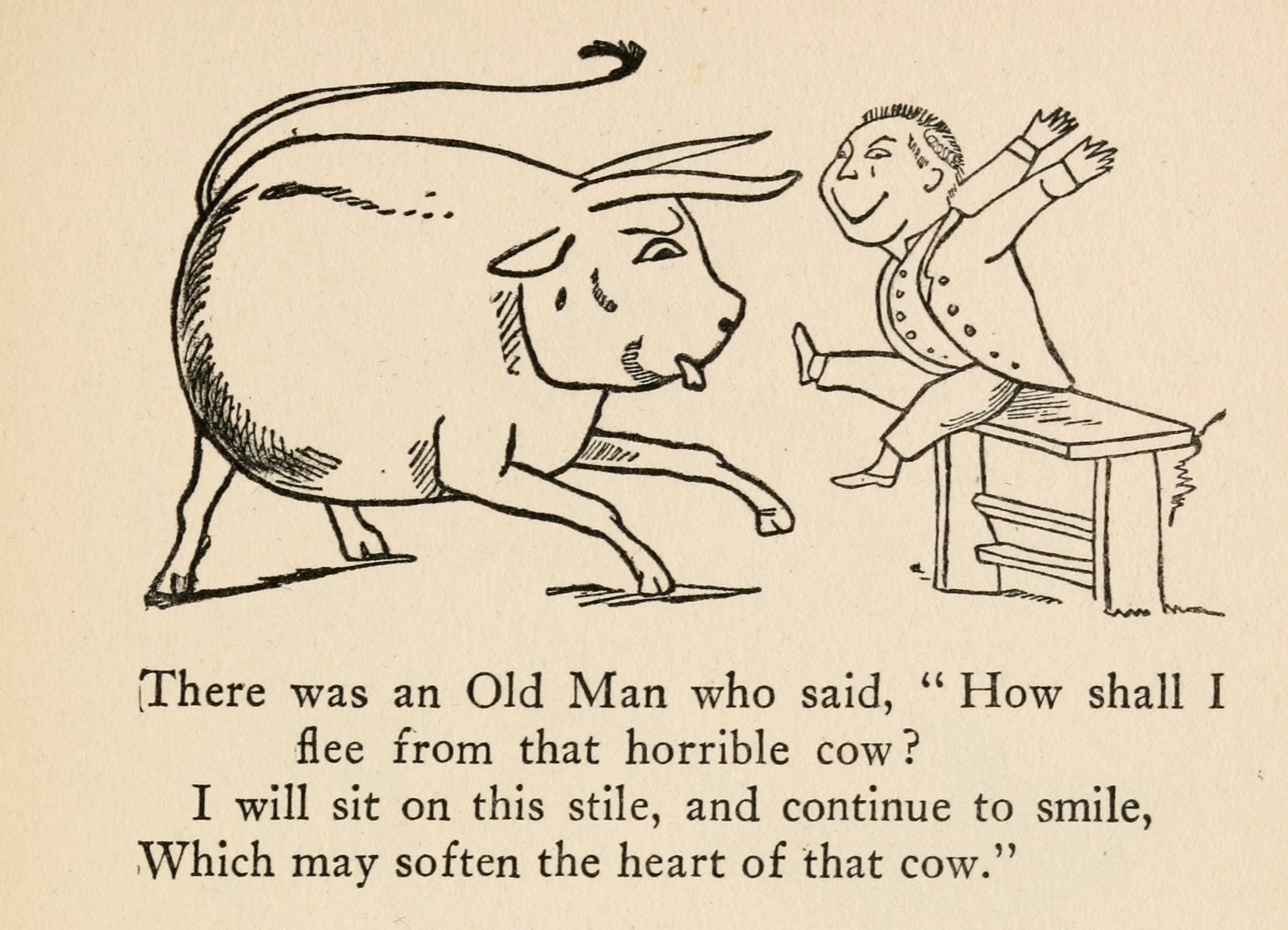


Thank you for the discovery!
I suppose, Carpenter might find a version of the limerick in Tolkien’s papers written by Ronald’s hand, and decide that he was the author of it. Back in the 1900-es, Tolkien might translate the limerick into Nevbosh. In ‘A Secret Vice’ he did not claim to be the author of the poem.
Another example could be found at https://www.hammondandscull.com/addenda/collected_poems.html.
The text of the limerick published on p. 1366 of the Collected Poems as text C and attributed to Tolkien, was an adaptation of the earlier work:
‘On 26 September 2024, Joe Hoffman noted in his blog Idiosophy (‘Tolkien Wrote Limericks?!’) that ‘There was an old monk of Algeria’, etc. seemed familiar.’
Wayne Hammond and Christina Scull write there that a version was published in 10 July 1902 issue of Life , an American magazine. According to them, ‘If the Evening Sun is correct – that it came originally from Dublin and was ‘well known in university circles’ – then Tolkien might have come across it at Oxford after matriculating there in 1911. He wrote (undated) limericks C and D in the sketchbook he called The Book of Ishness, probably around 1912, to judge by the location of the leaf relative to datable work. <…> But if Tolkien did adapt the well-known limerick, we still do not know the text with which he began.’
The earliest version of the limerick I have found (among others) was published in pornographic magazine ‘The Pearl’, No. 2, August 1879 (you must be 18+ to use the link: https://archive.org/details/pearl_1-6/page/n61/mode/2up, the limerick is at the left page below). I do not think Tolkien read such a magazine prohibited long before he was born. Nevertheless, the London magazine, claimed to be published in Oxford, ‘At the University Press’, could be an evidence of the poem being known’ in Oxford ‘university circles’.
I suppose, Carpenter might find a version of the limerick in Tolkien’s papers written by Ronald’s hand, and decide that he was the author of it. Back in the 1900-es, Tolkien might translate the limerick into Nevbosh. In ‘A Secret Vice’ he did not claim to be the author of the poem.
Another example could be found at https://www.hammondandscull.com/addenda/collected_poems.html.
The text of the limerick published on p. 1366 of the Collected Poems as text C and attributed to Tolkien, was an adaptation of the earlier work:
‘On 26 September 2024, Joe Hoffman noted in his blog Idiosophy (‘Tolkien Wrote Limericks?!’) that ‘There was an old monk of Algeria’, etc. seemed familiar.’
Wayne Hammond and Christina Scull write there that a version was published in 10 July 1902 issue of Life , an American magazine. According to them, ‘If the Evening Sun is correct – that it came originally from Dublin and was ‘well known in university circles’ – then Tolkien might have come across it at Oxford after matriculating there in 1911. He wrote (undated) limericks C and D in the sketchbook he called The Book of Ishness, probably around 1912, to judge by the location of the leaf relative to datable work. <…> But if Tolkien did adapt the well-known limerick, we still do not know the text with which he began.’
The earliest version of the limerick I have found (among others) was published in pornographic magazine ‘The Pearl’, No. 2, August 1879 (you must be 18+ to use the link: https://archive.org/details/pearl_1-6/page/n61/mode/2up, the limerick is at the left page below). I do not think Tolkien read such a magazine prohibited long before he was born. Nevertheless, the London magazine, claimed to be published in Oxford, ‘At the University Press’, could be an evidence of the poem being known’ in Oxford ‘university circles’.
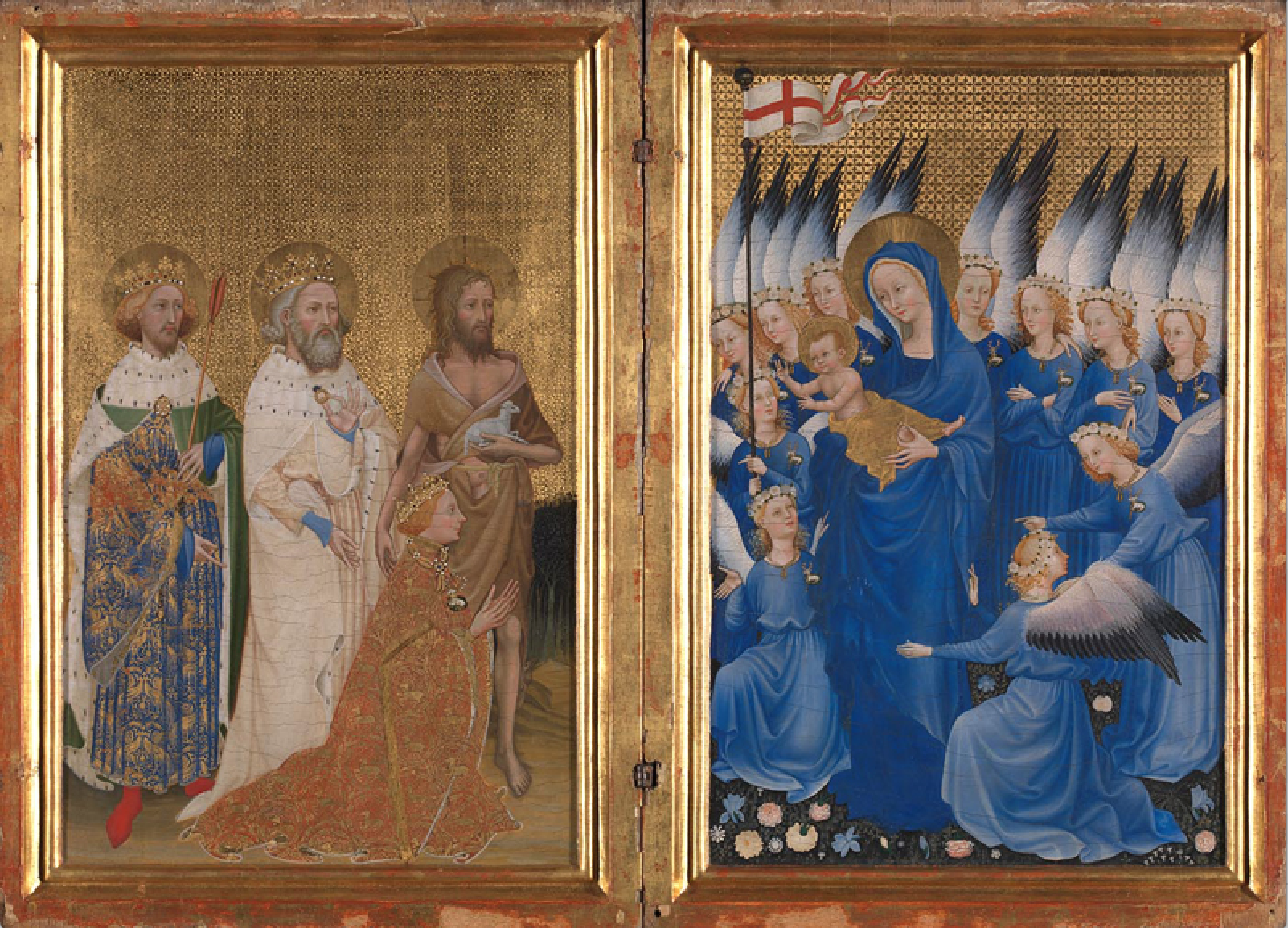
During my most recent visit to Assisi—one of many—to the places Tolkien visited in 1955 with his daughter Priscilla, I discovered a very interesting gift he made to the Monastery of Saint Colette, where he stayed from August 6 to 13: a framed reproduction of the Wilton Diptych, a late 14th-century English devotional masterpiece associated with King Richard II.
All the information can be found in this article.
https://tolkienarchive.blogspot.com/2025/07/the-wilton-diptych-gift-from-tolkien-to.html
[Cover: Front panel. The Wilton Diptych. National Gallery, London]
All the information can be found in this article.
https://tolkienarchive.blogspot.com/2025/07/the-wilton-diptych-gift-from-tolkien-to.html
[Cover: Front panel. The Wilton Diptych. National Gallery, London]


Thanks for sharing, Tolkieniano! One question I have after reading your lovely article is - where (and when) did Tolkien obtain this Wilton Diptych reproduction, in order to gift it to the Monestary? Did he bring it from England, or find it in a previous city he visited in Italy, or at local shop while staying at the Monestary...? Probably not possible to answer at this point, of course.
Thank you, Urulókë! I’m glad you liked it. I can’t be completely certain, but I’m convinced that Tolkien brought the image with him from England. In Assisi—both in 1955 and still today—only reproductions of Giotto’s frescoes (those in the Upper Basilica) and other religious artworks located in the city’s churches are sold. Before arriving in Assisi, Tolkien had spent a week in Venice, but I don’t believe he purchased the reproduction there. I also don’t recall ever seeing reproductions of the Wilton Diptych for sale in Rome either.
English version of an article I wrote in 2017 about Tolkien, Meccano magazine, Hornby, and the "train mania" of the professor's children.
Article
Article
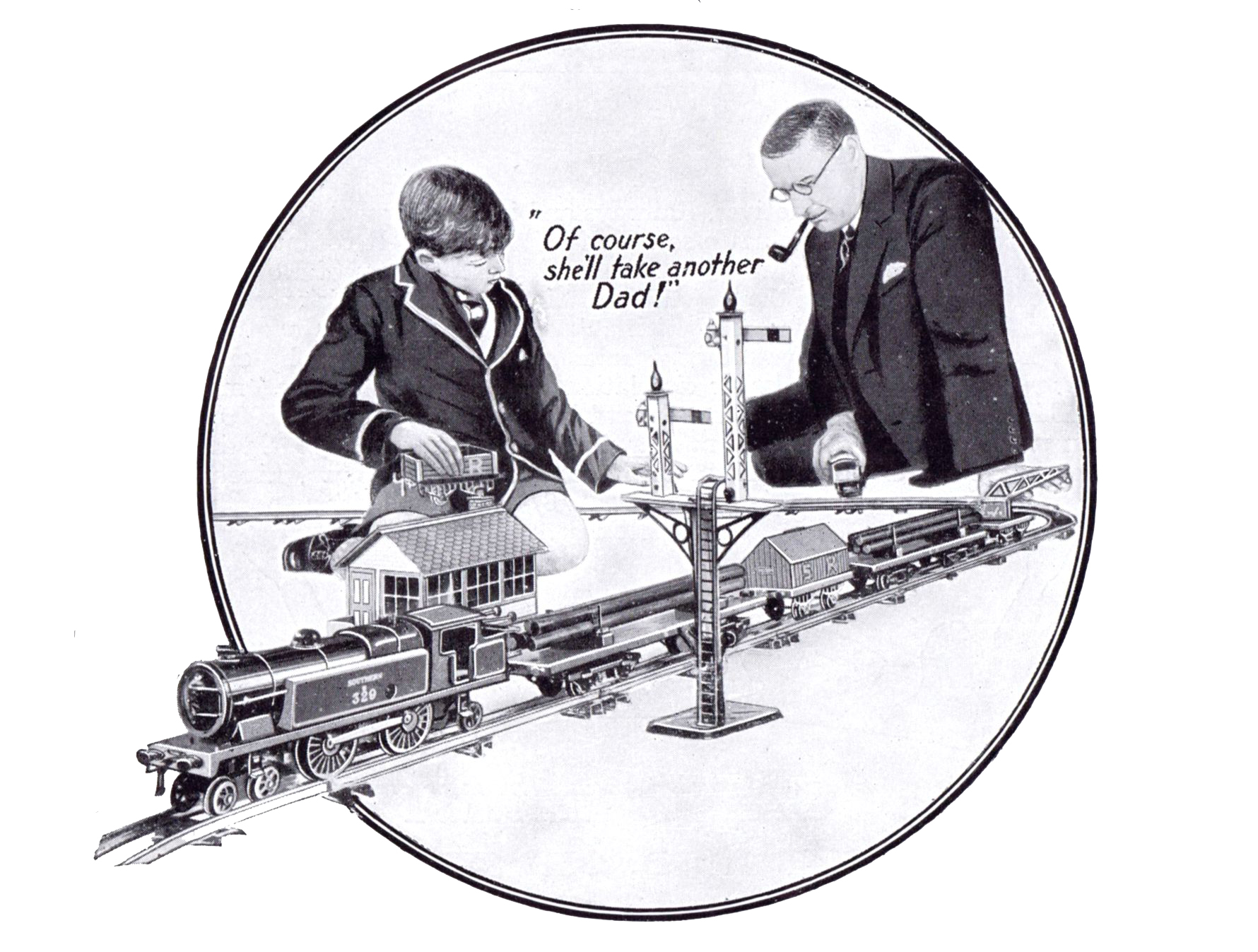


Thank you Oronzo. I have added a reference to your article on Letter from Father Christmas to John, Michael, Christopher and Priscilla Tolkien • 23 December 1932 (#1954).
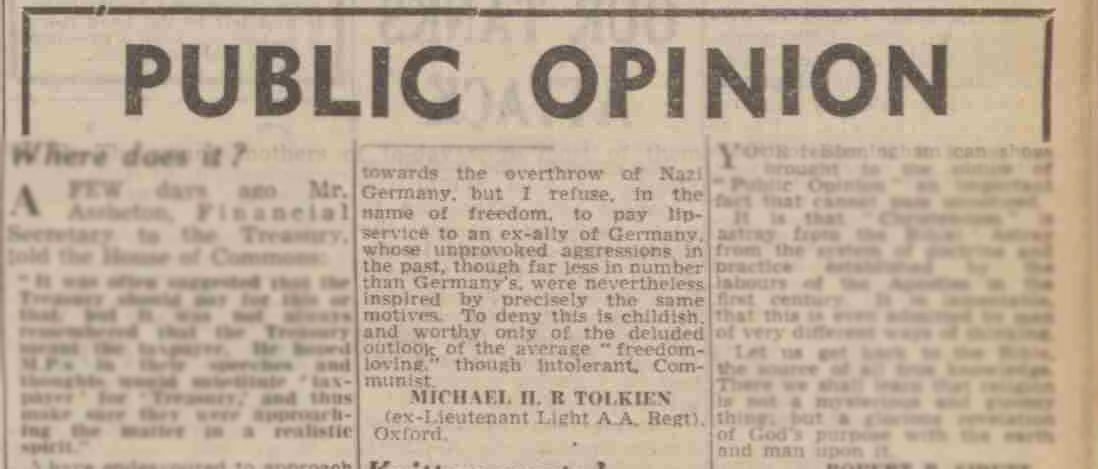
In this article, a revised and extended version of my piece “1944: Michael H. R. Tolkien and the Soviet ‘mania’” published on Academia.edu, I present some information regarding Tolkien’s second son that is still unpublished for the general public and has never been cited by other scholars in their work. In particular, I am referring to several letters published between 1944 and 1948 in the Evening Despatch, the Birmingham daily newspaper, and in the Catholic Herald, the leading British Catholic weekly, in which M.H.R.T., during and immediately after the Second World War, denounced the myth and idealisation of Communism in England, warned against Soviet influence and defended Christian values. To these, I add an appendix on the misrepresentation of history which claims that J. R. R. Tolkien was a reader of Candour, the British nationalist political magazine founded by journalist and political activist A. K. Chesterton.
Article
Article
What I would like to share with you is a piece of research that began almost by chance. It often happens that, while I am walking the main road of an investigation, my gaze is suddenly drawn to a narrower, shadowy path — seemingly marginal, little trodden by other fellow travellers. And so, compelled by a silent call, I choose to venture along that hidden track, only to leave it once my curiosity feels fully satisfied. This is precisely what occurred when I stumbled upon the word hobyah, which I immediately linked to hobbit, owing to the shared prefix hob- that evokes the whole family of British mythical beings known as hob, hobgoblin, hob-thrush, and other mischievous spirits or sprites.
Article
Article

12
 61
61