




Tolkien's Oxford English Monographs
2026-3-2 11:05:45 PM UTC
Carpenter #165: Letter from J.R.R. Tolkien to Houghton Mifflin Co. • 30 June 1955 (#478)
This article is an introduction to the Oxford English Monograph series on which J. R. R. Tolkien served as a General Editor (he oversaw much of the series from its inception around 1940 to his retirement in 1959). Tolkien’s role varied slightly between general editorial oversight and contributing prefatory notes, all of the following volumes were published in the Oxford English Monographs series during the period he was associated with it.
It seems that Tolkien’s involvement as a General Editor of the series arose naturally from his academic position, reputation, and institutional role within the University of Oxford. In 1925, Tolkien was appointed Rawlinson and Bosworth Professor of Anglo-Saxon. In 1945, he became Merton Professor of English Language and Literature. His 1936 lecture “Beowulf: The Monsters and the Critics” established him as a major voice in Anglo-Saxon studies and at the time, Oxford University Press relied heavily on senior Oxford academics to serve as general editors for subject-based series.
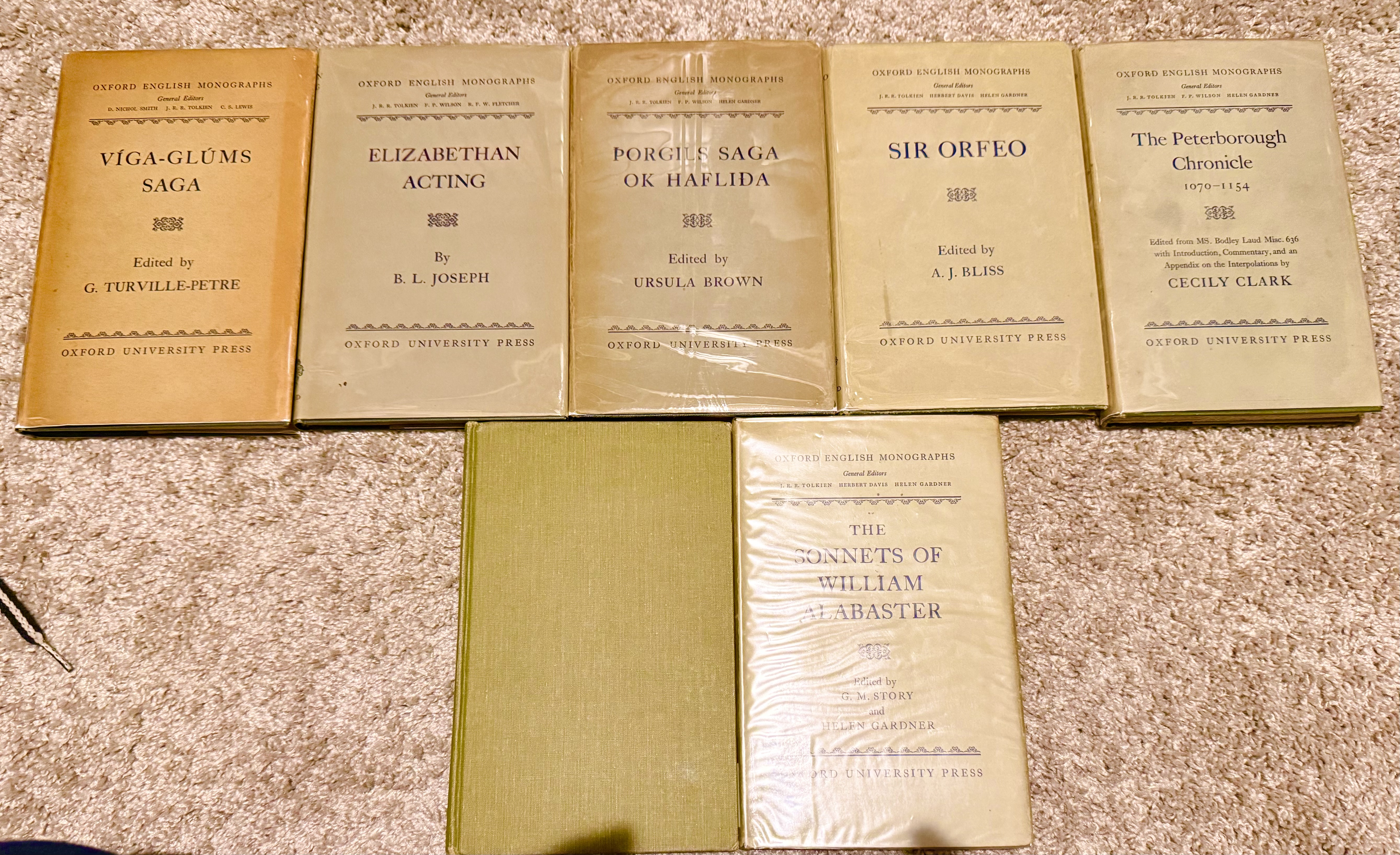
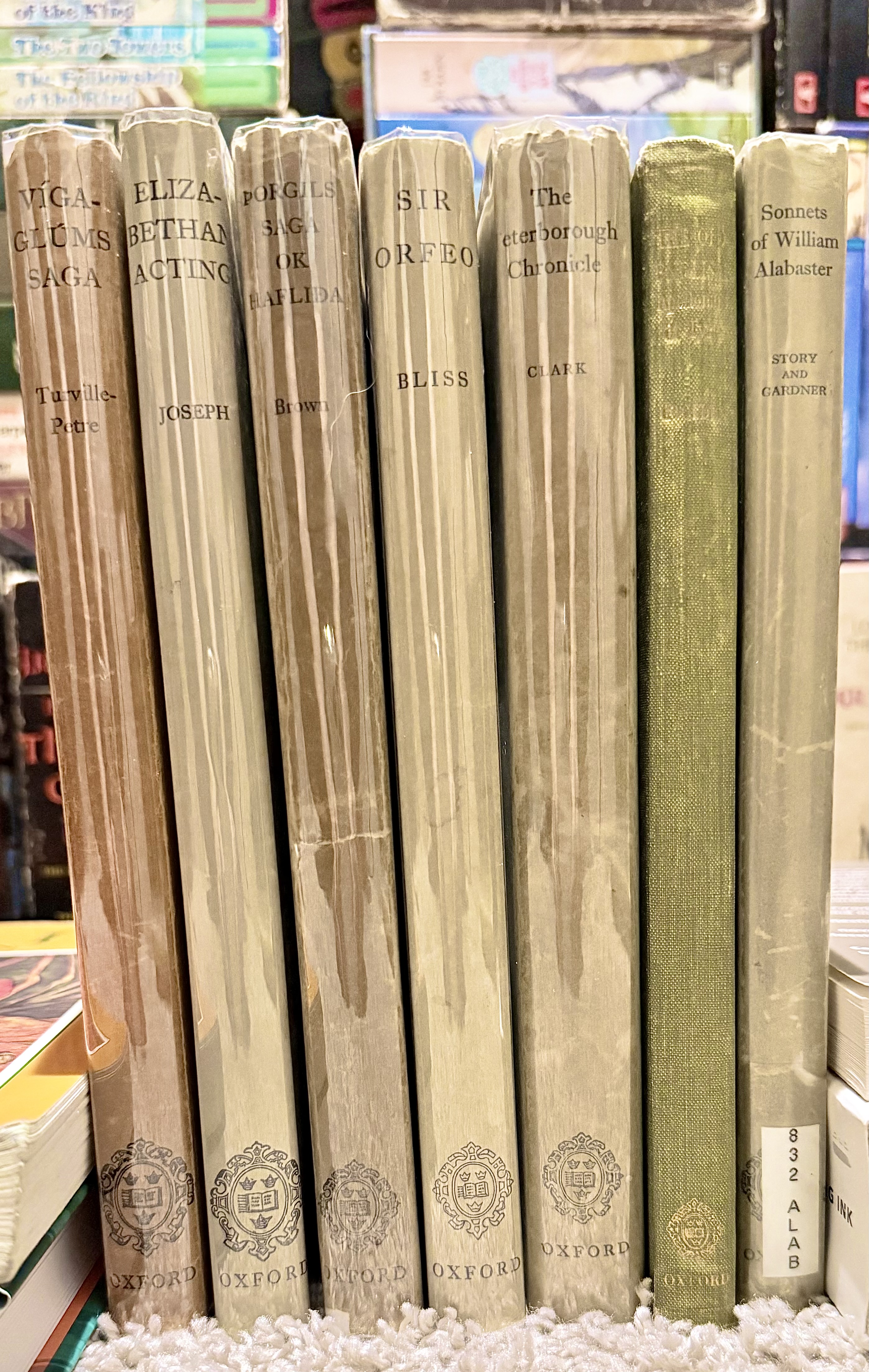
All seven together, jacket has been left off of one volume in order to see the green binding that all of them share.
Tolkien didn’t author these monographs but served as a editor or contributor during much of its early run. For some titles, his involvement is specifically mentioned in the preface or as an editorial contributor even if he didn’t write large sections himself. The contents of the seven volumes themselves, are mostly scholarly editions of medieval (Old English, Middle English, Old Norse/Icelandic) and early modern texts, with introduction, notes, and glossary.

Prefatory note thanking Tolkien
“The aim of this series is to provide reliable texts with such introduction and commentary as may be necessary for their understanding.”
--J.R.R. Tolkien prefatory note to Old English Apollonius of Tyre
"It is a pleasure to record the debts which I have incurred in preparing this edition of Sir Orfeo: to Professor J.R.R. Tolkien, whose penetrating scholarship is an inspiration to all who have worked with him... to the editors of the Oxford English Monographs, who agreed to include this volume in the series."
--A.J. Bliss prefatory note in Sir Orfeo
Víga-Glúms Saga (1940)
First in the series, edited by G. Turville-Petre, was an edition of an Icelandic saga. A critical scholarly text of Víga-Glúms saga, one of the classic Íslendingasögur (“Sagas of Icelanders”) recounting feuds and heroism in medieval Iceland. These sagas are essential primary sources for Norse literature and culture. Tolkien and C.S. Lewis served as general editor for this early volume in the series. A second edition was published in 1960 with an altered dust jacket and corrections to the text.
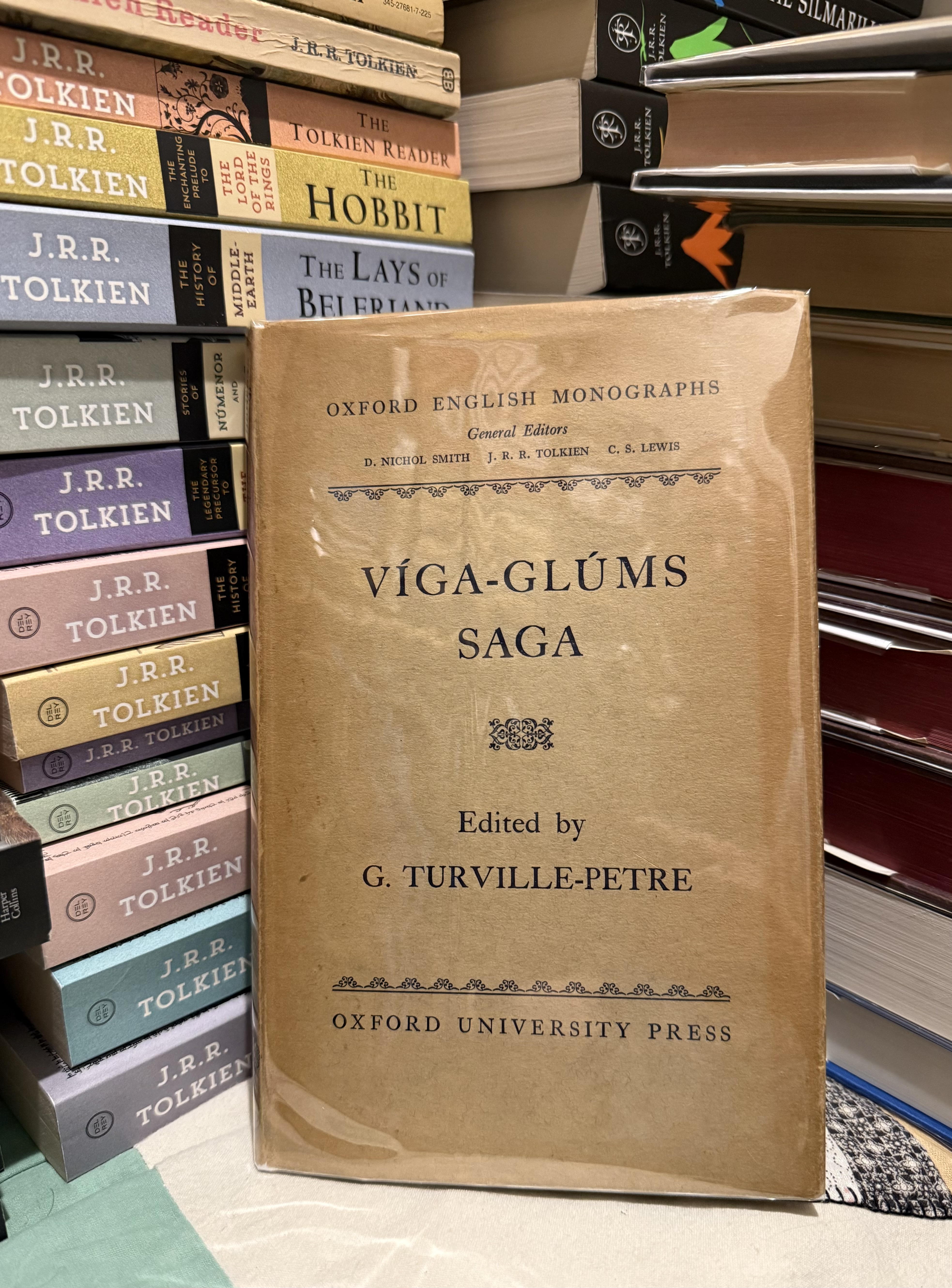
First Edition
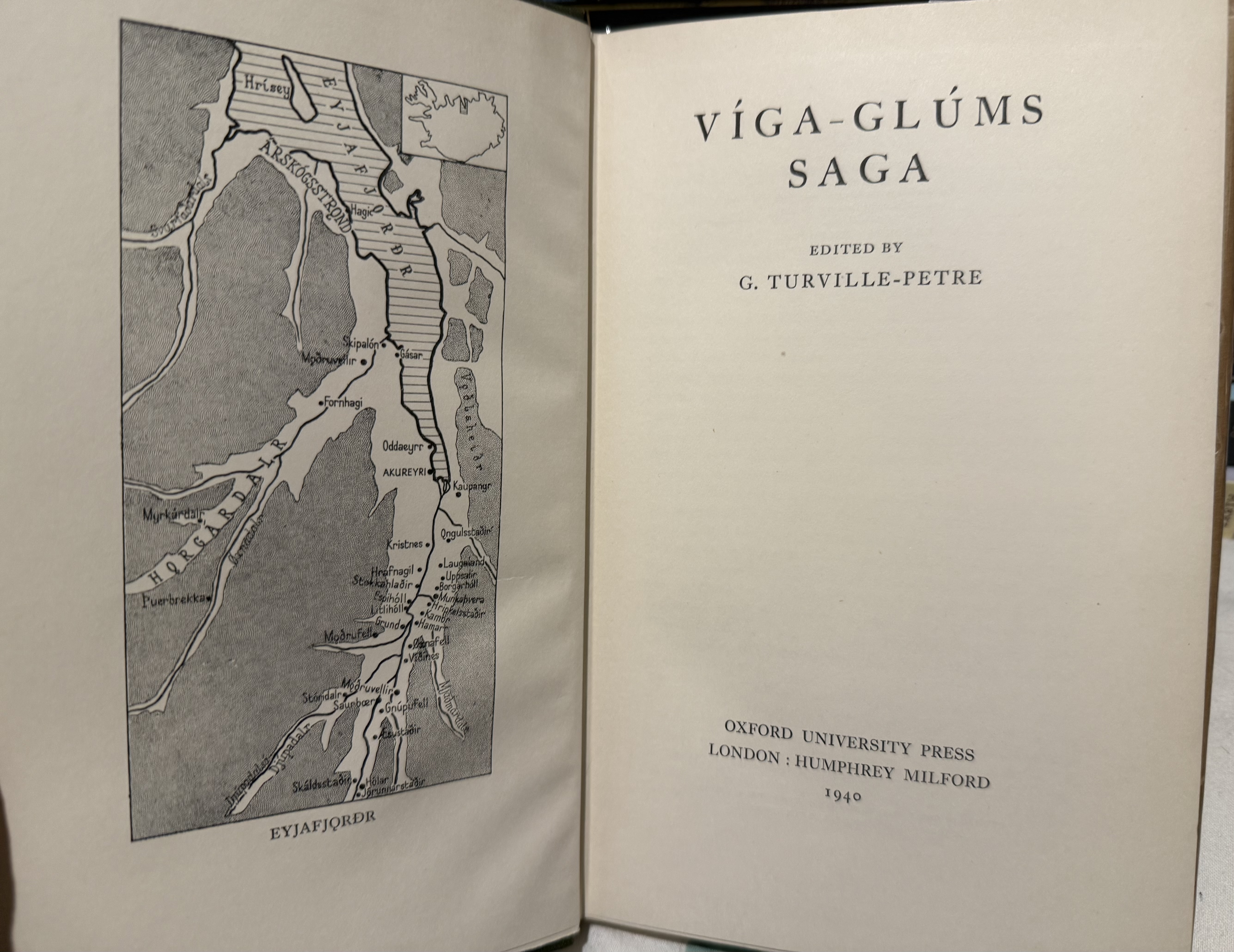
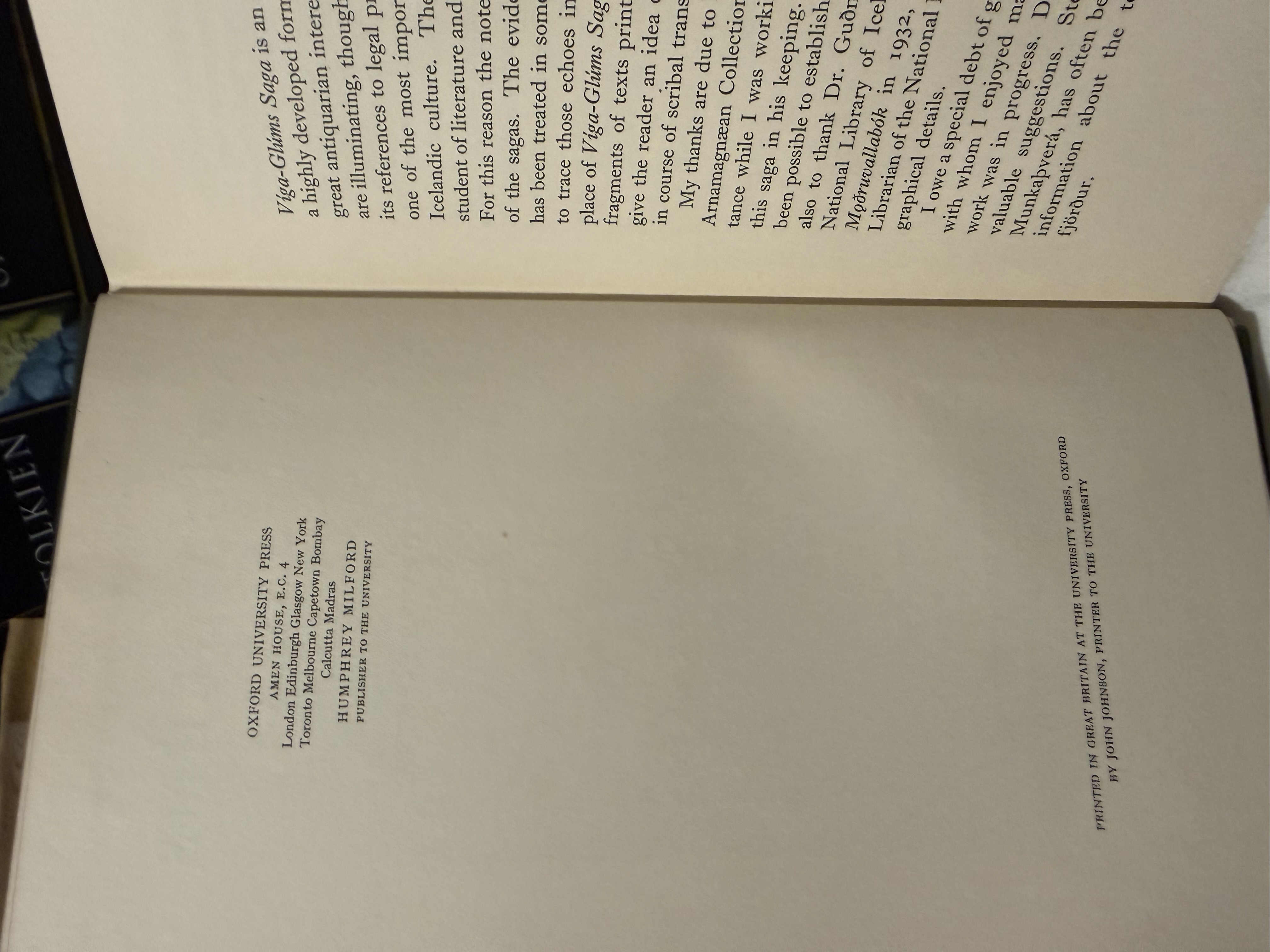
First Edition Title & Copyright Pages
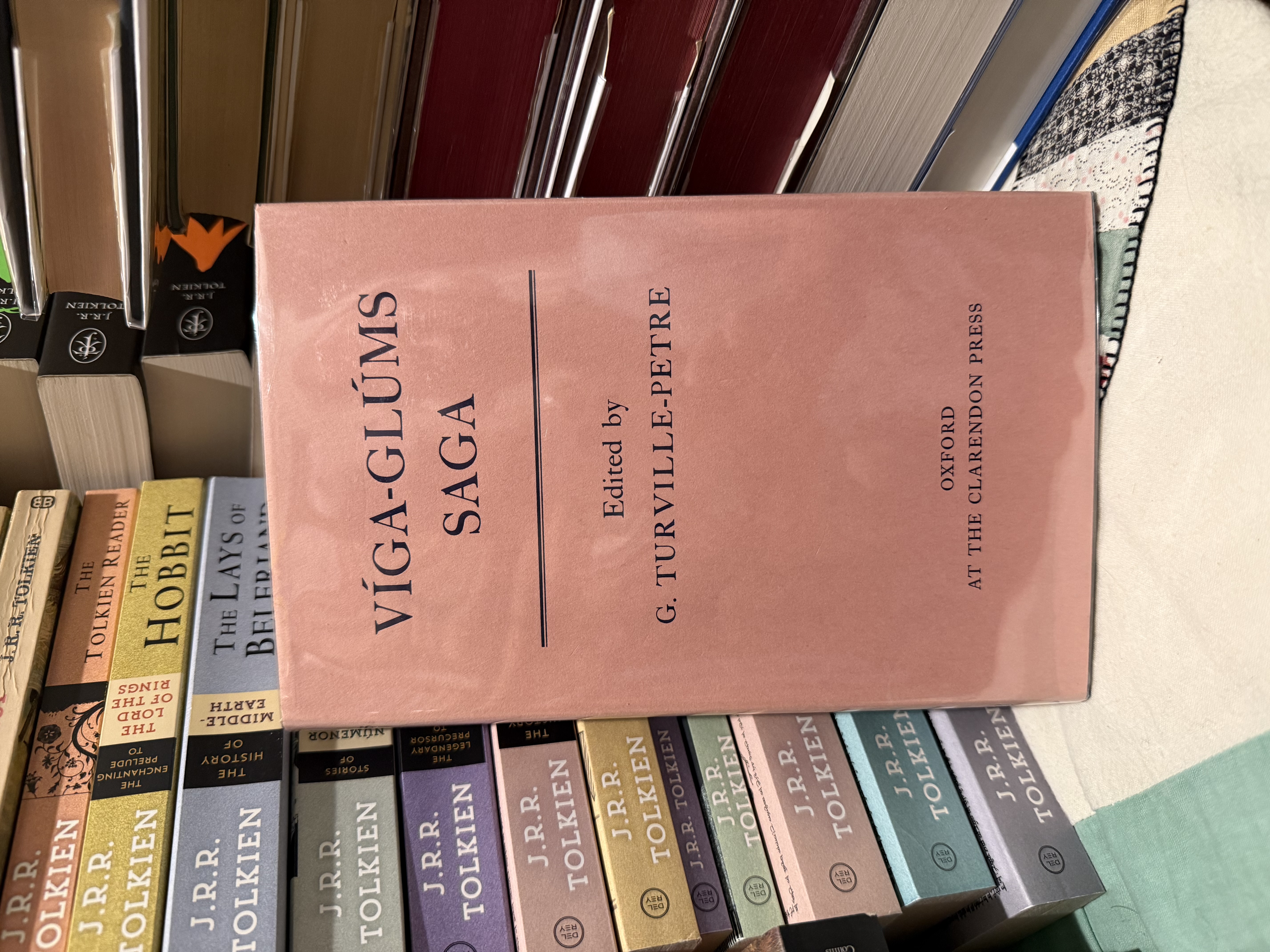
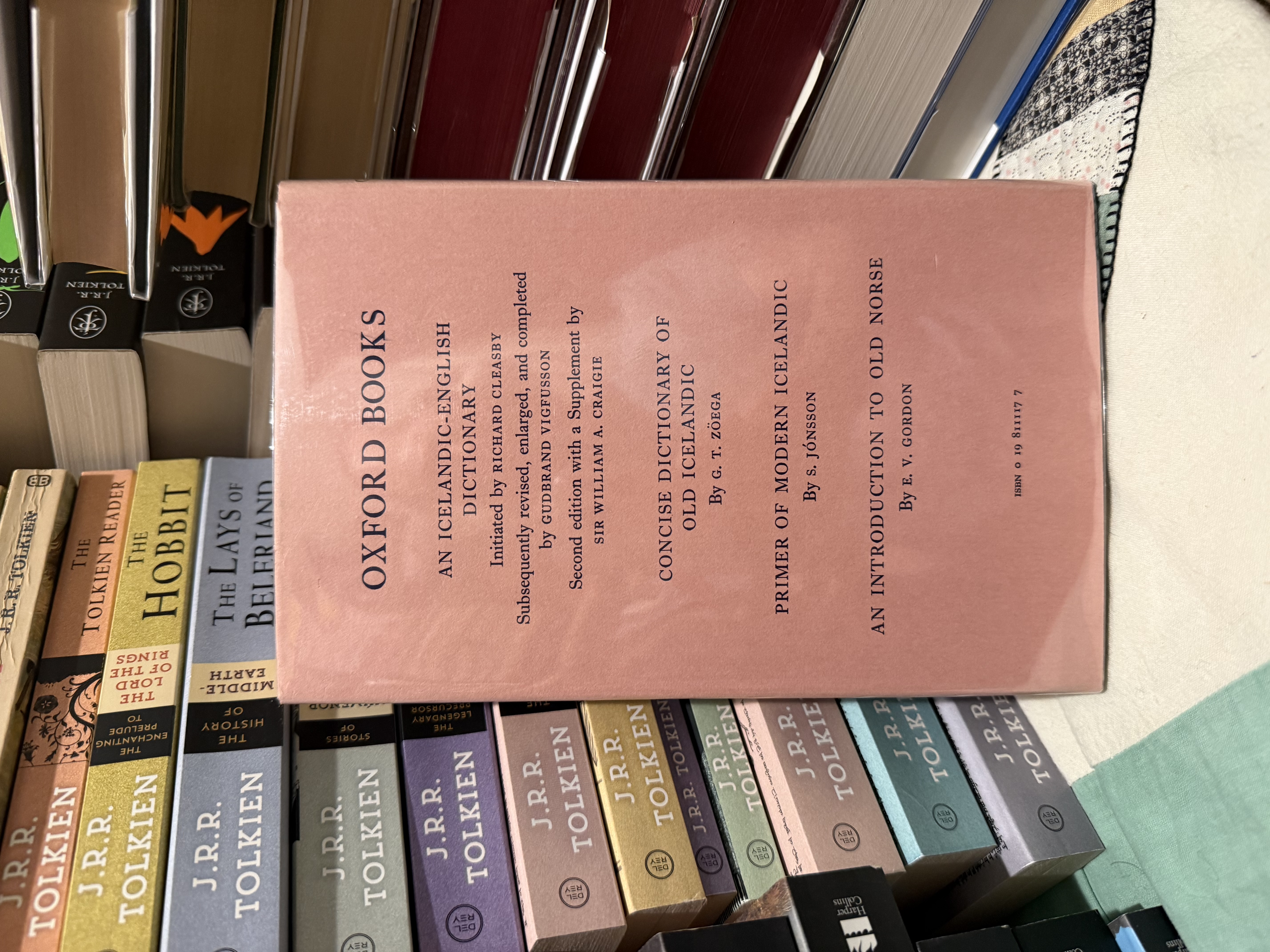
Second Edition
Elizabethan Acting (1951)
Second in the series, edited by B.L. Joseph, literary/historical study. This volume focuses on acting practice in Elizabethan England, a period vital for the development of English drama. Examines sources on performance practice, playhouse conventions, and the acting profession in the late 16th/early 17th century. Tolkien contributed editorial oversight and “comments and encouragement” as general editor.
There was a second impression very soon after the first which is discernible by looking at the copyright page. A second hardback edition was published in the 1960's with an altered dust jacket and corrections to the text.
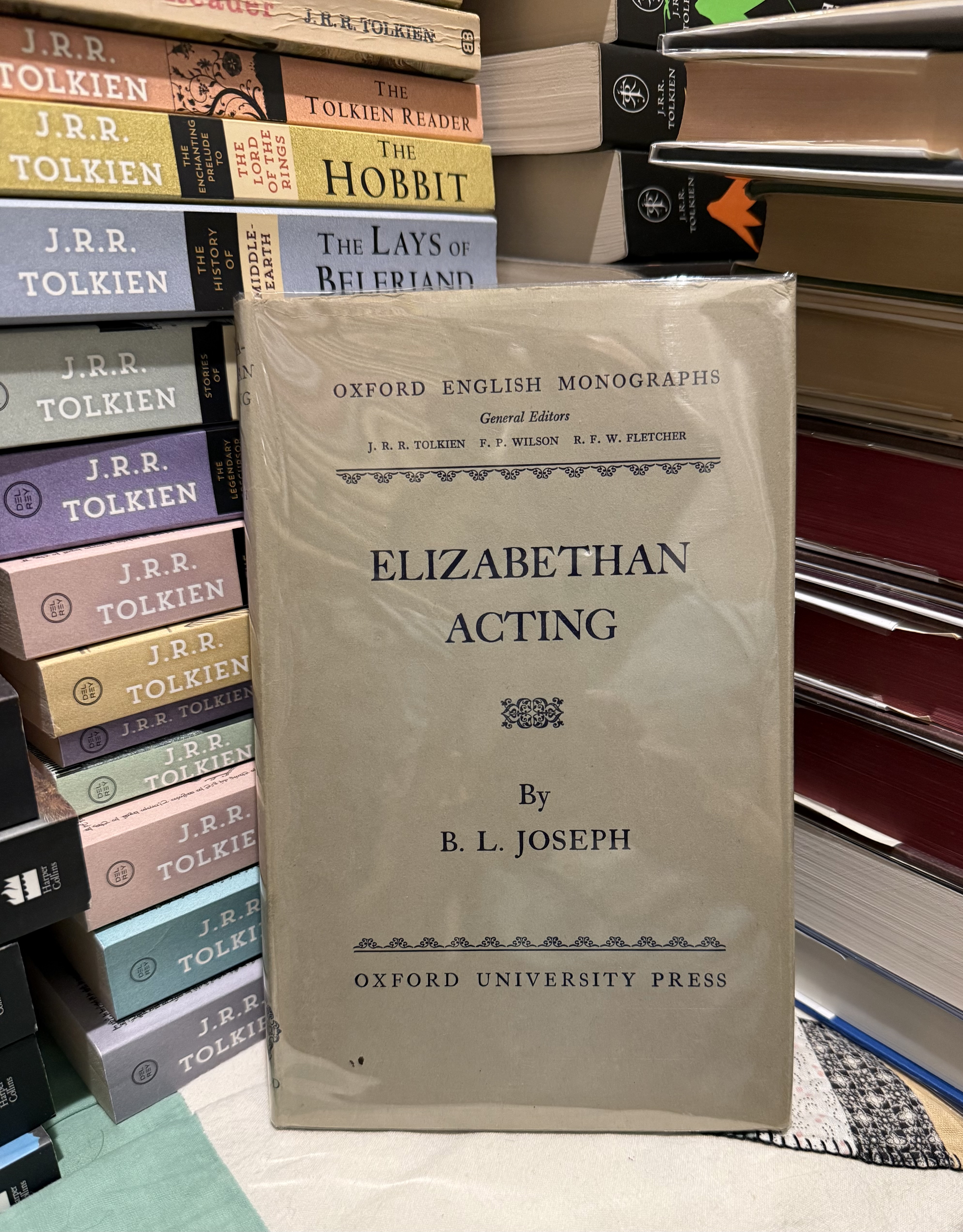
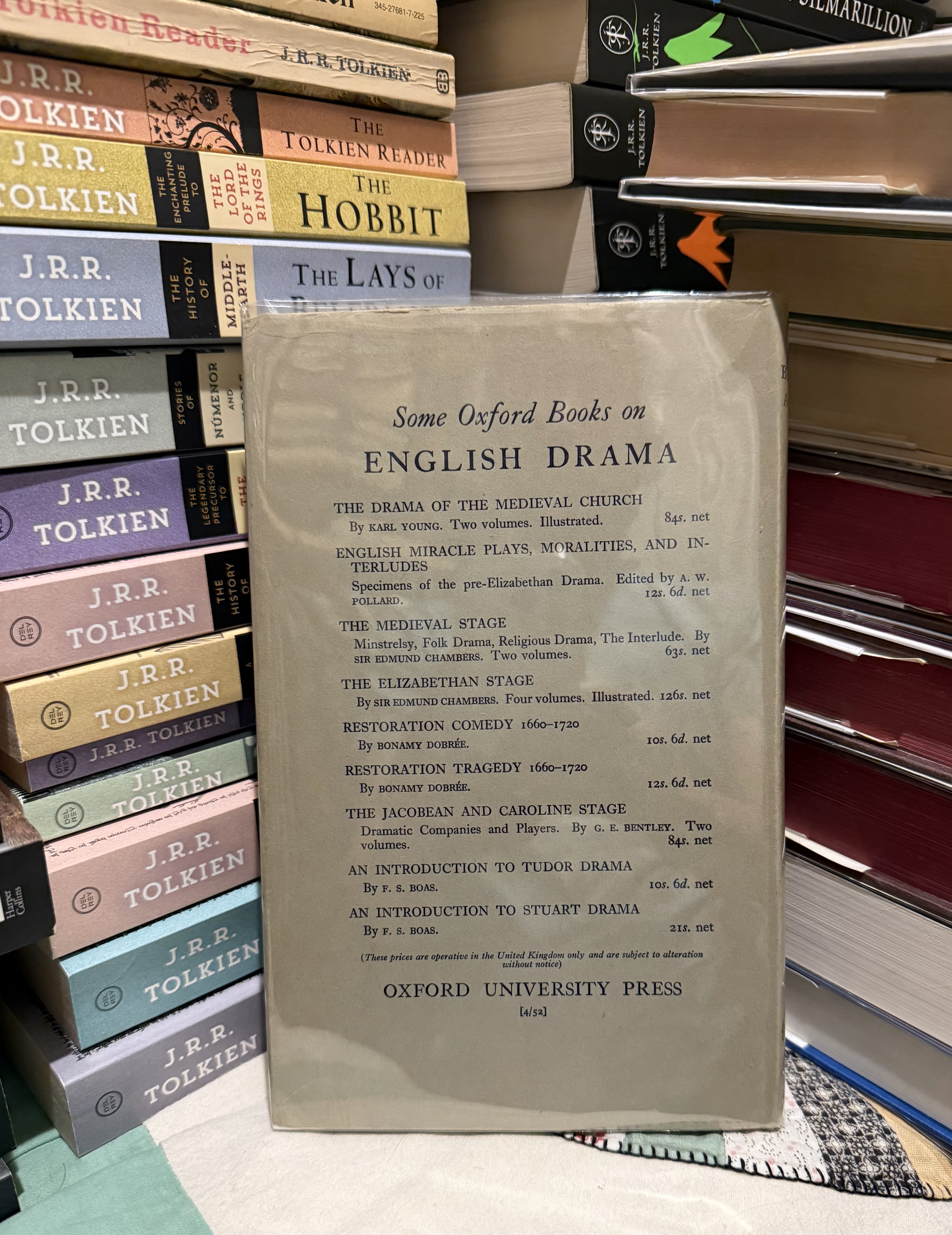
First Edition
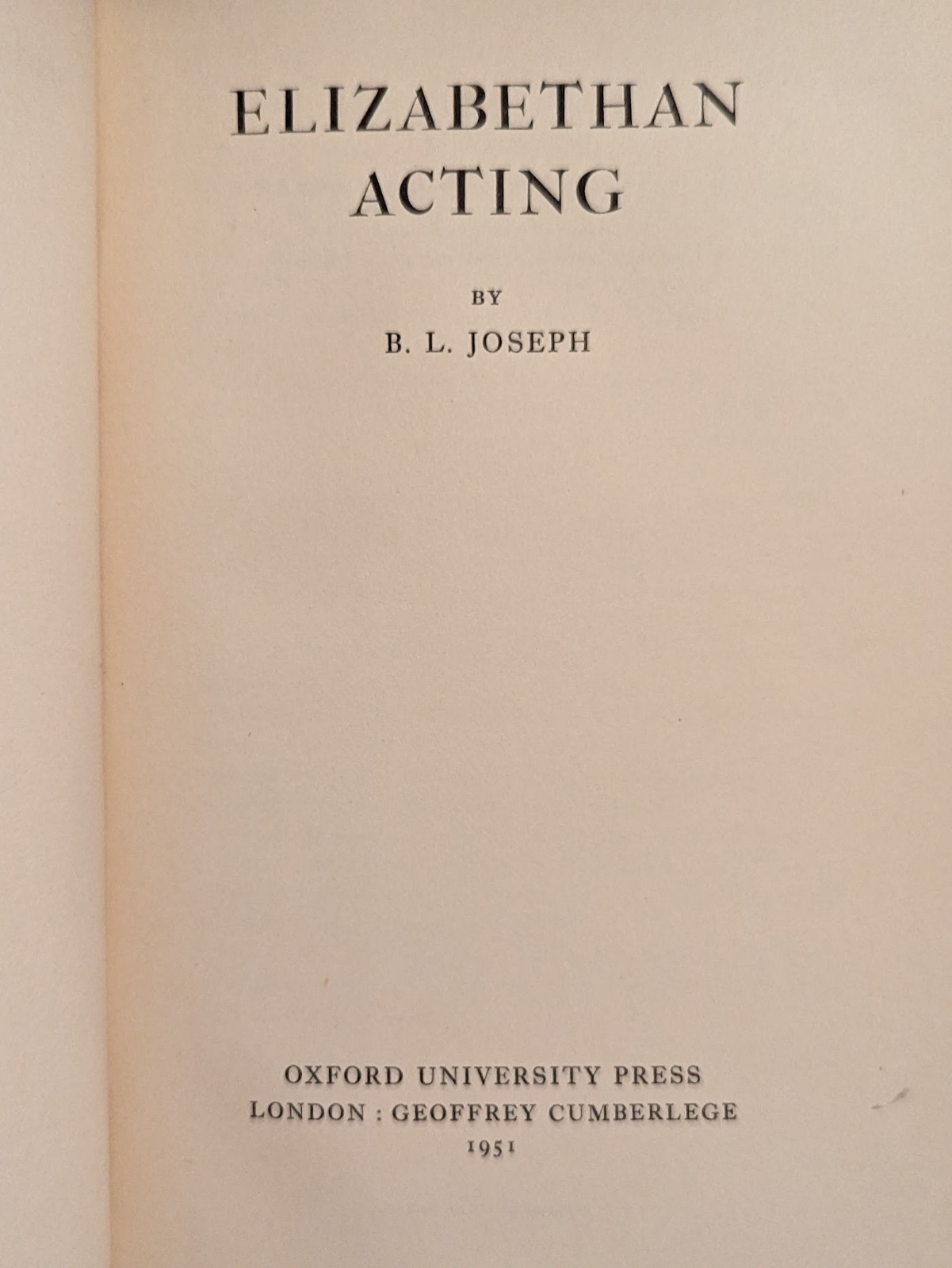
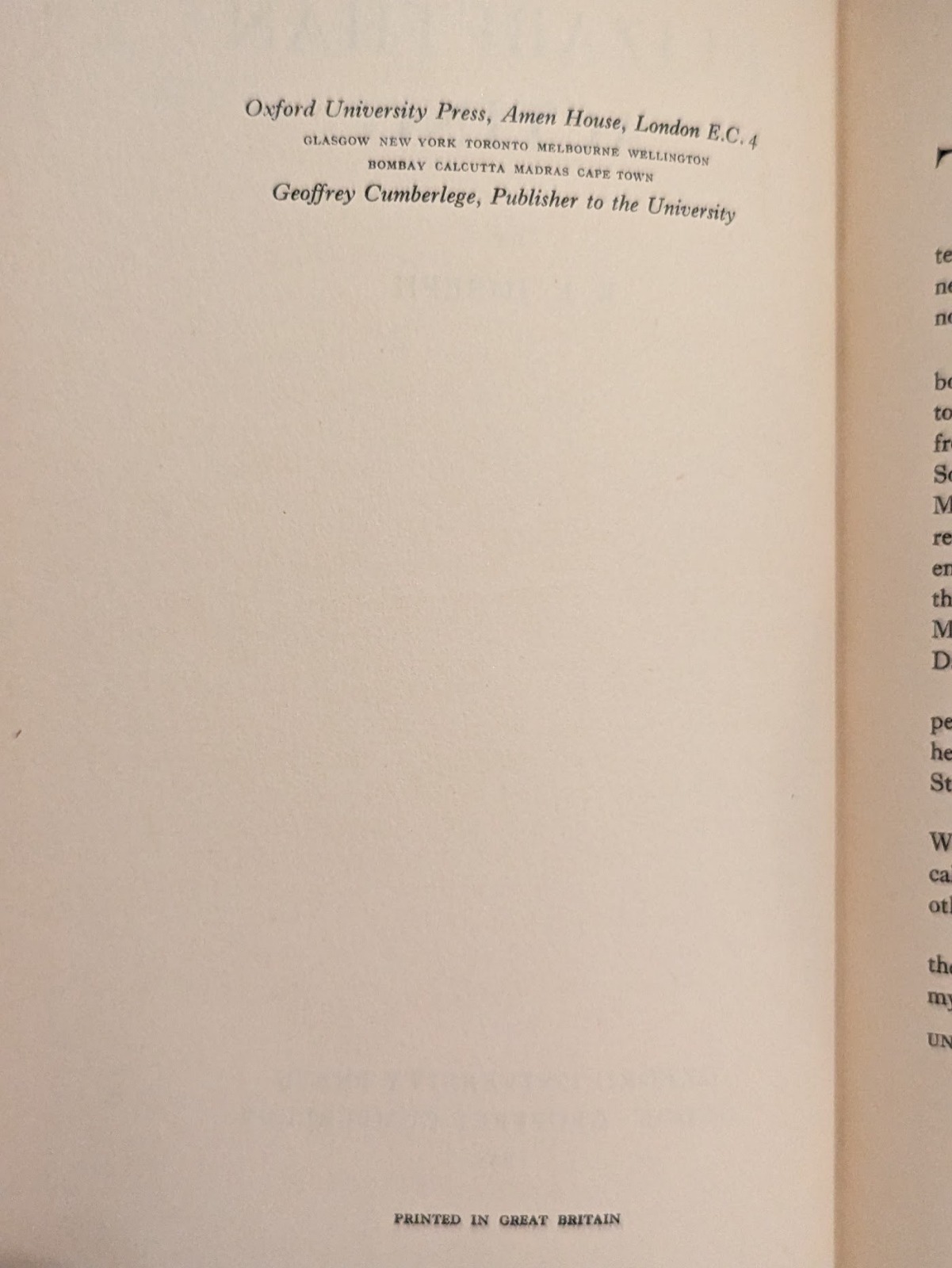
First Impression Title & Copyright Pages. Images Courtesy of remy
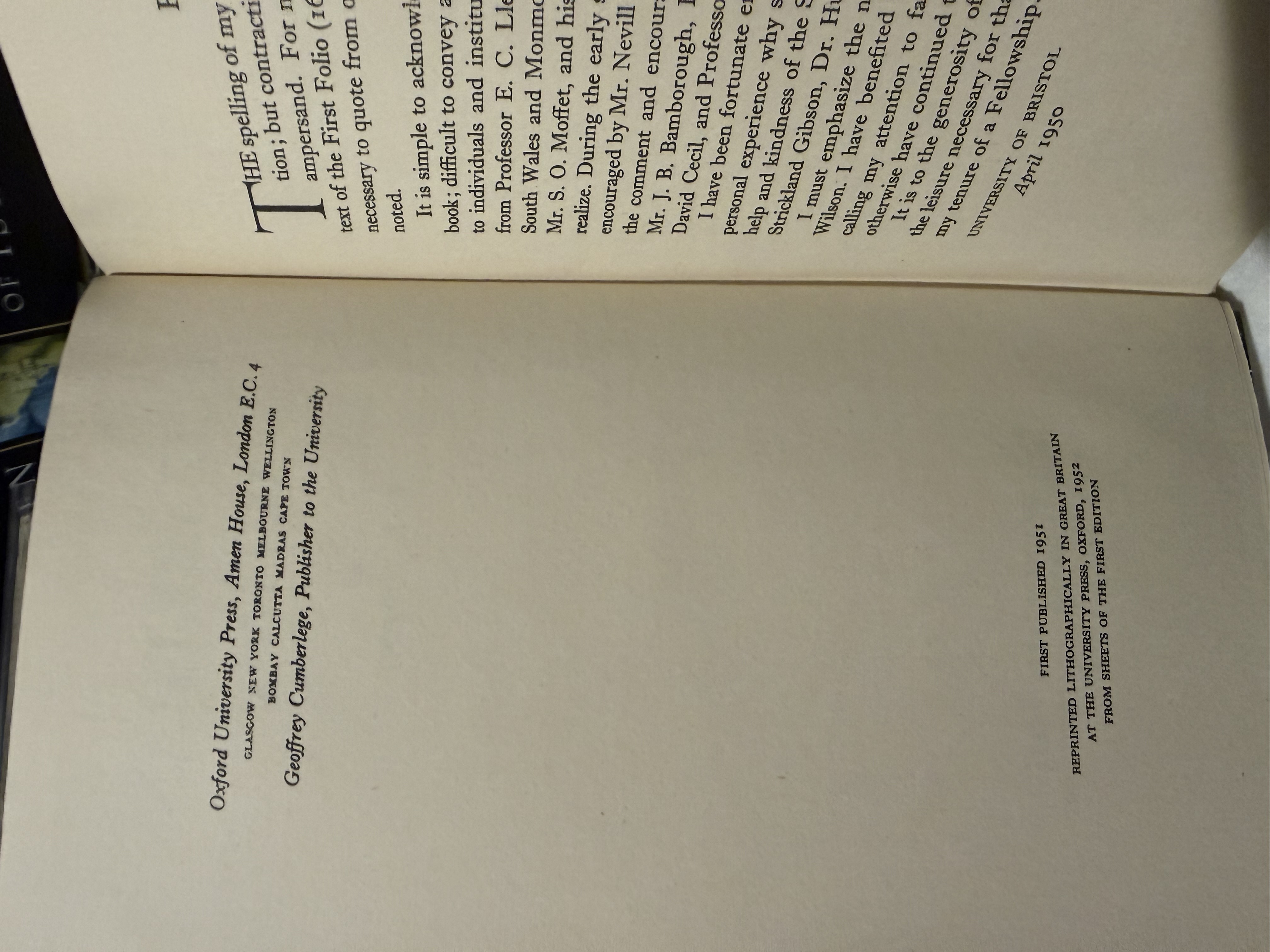
Second Impression Copyright Page.
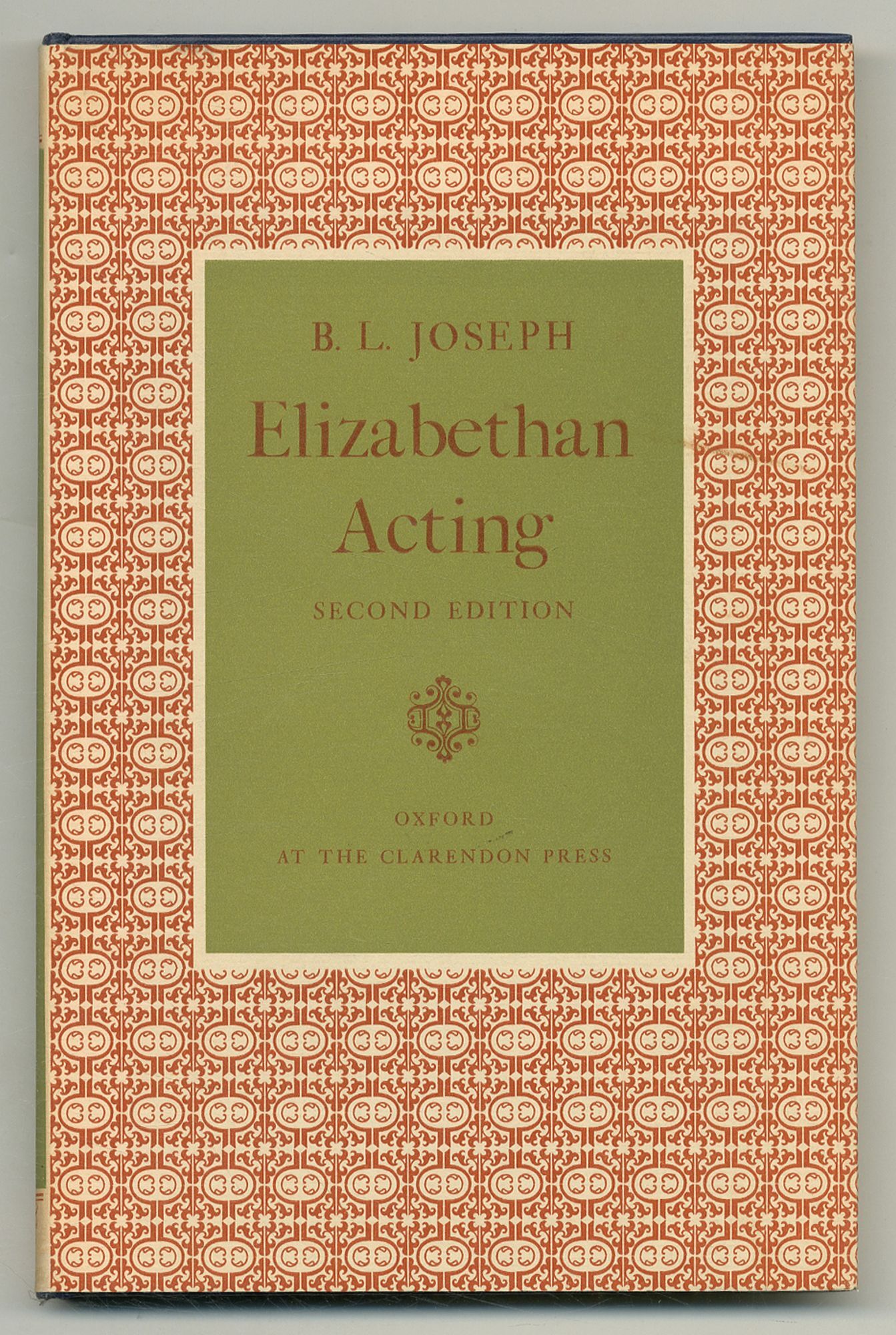
Second Edition
þorgils Saga ok Hafliða (1952)
Third in the series, edited by Ursula Brown and is an Old Icelandic saga. Critical edition of Þorgils saga ok Hafliða from the Sturlunga saga corpus, an important tale of family conflict and politics in 12th–13th-century Iceland. Scholarly editions like this helped to preserve and interpret medieval Norse narrative texts.
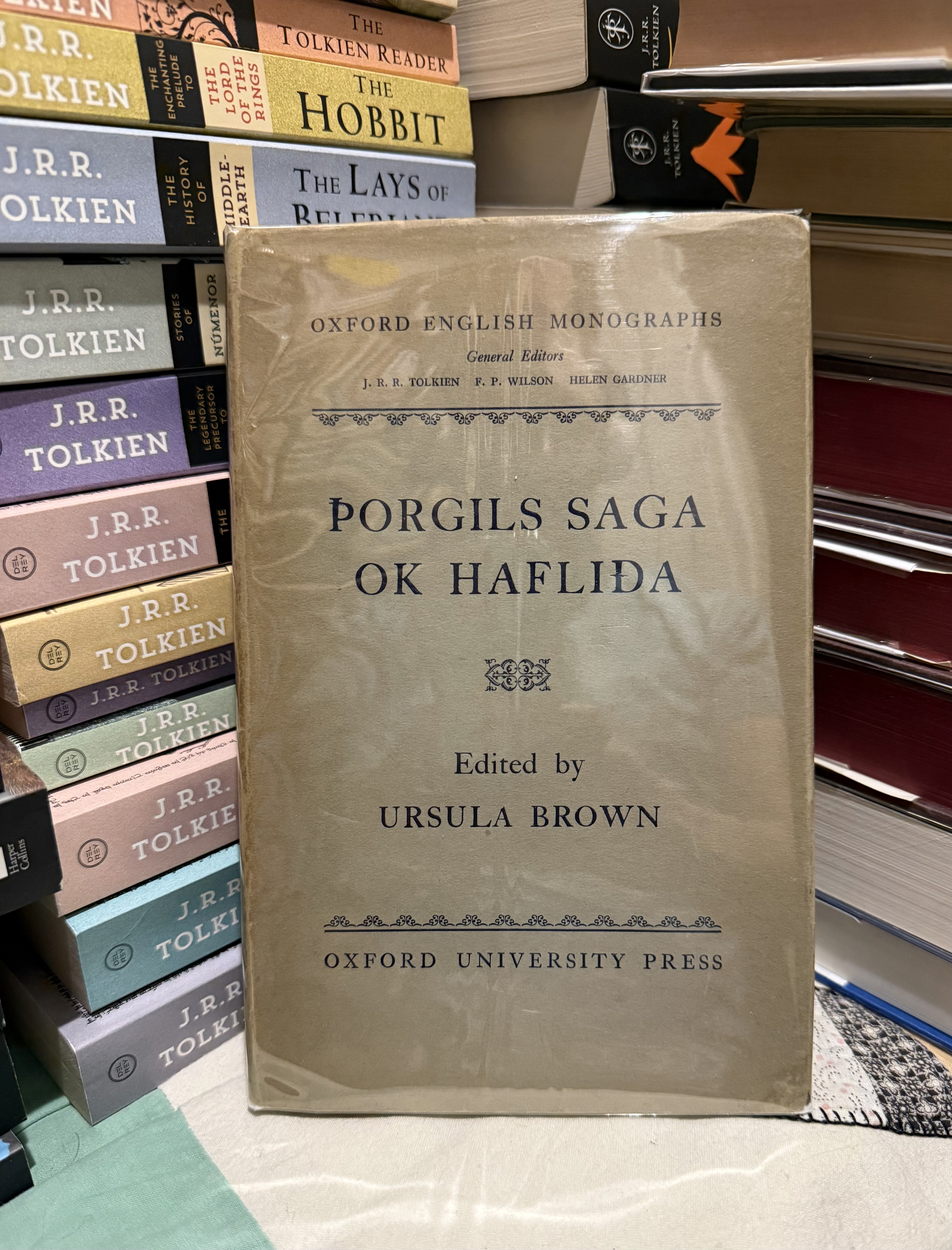
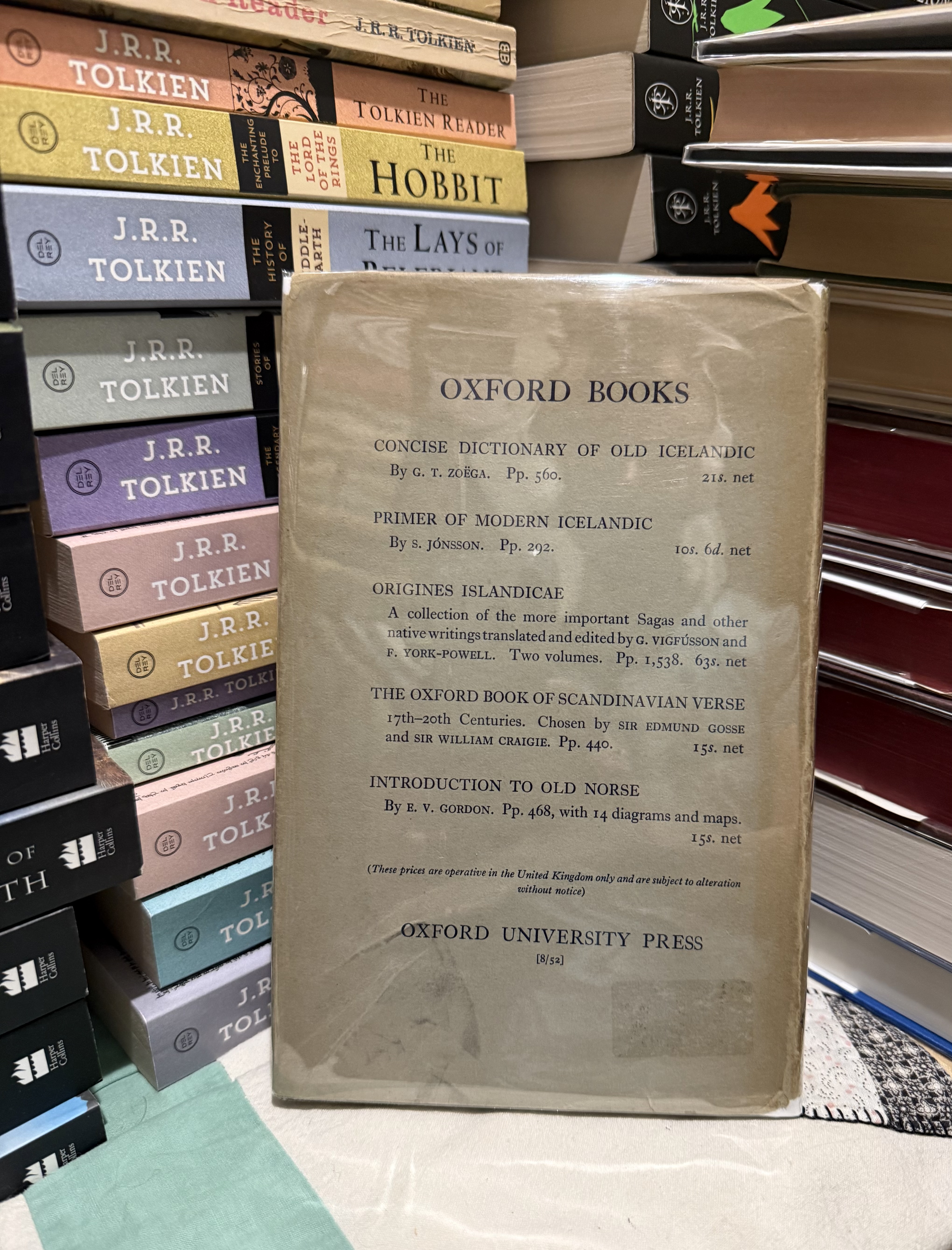
First Edition
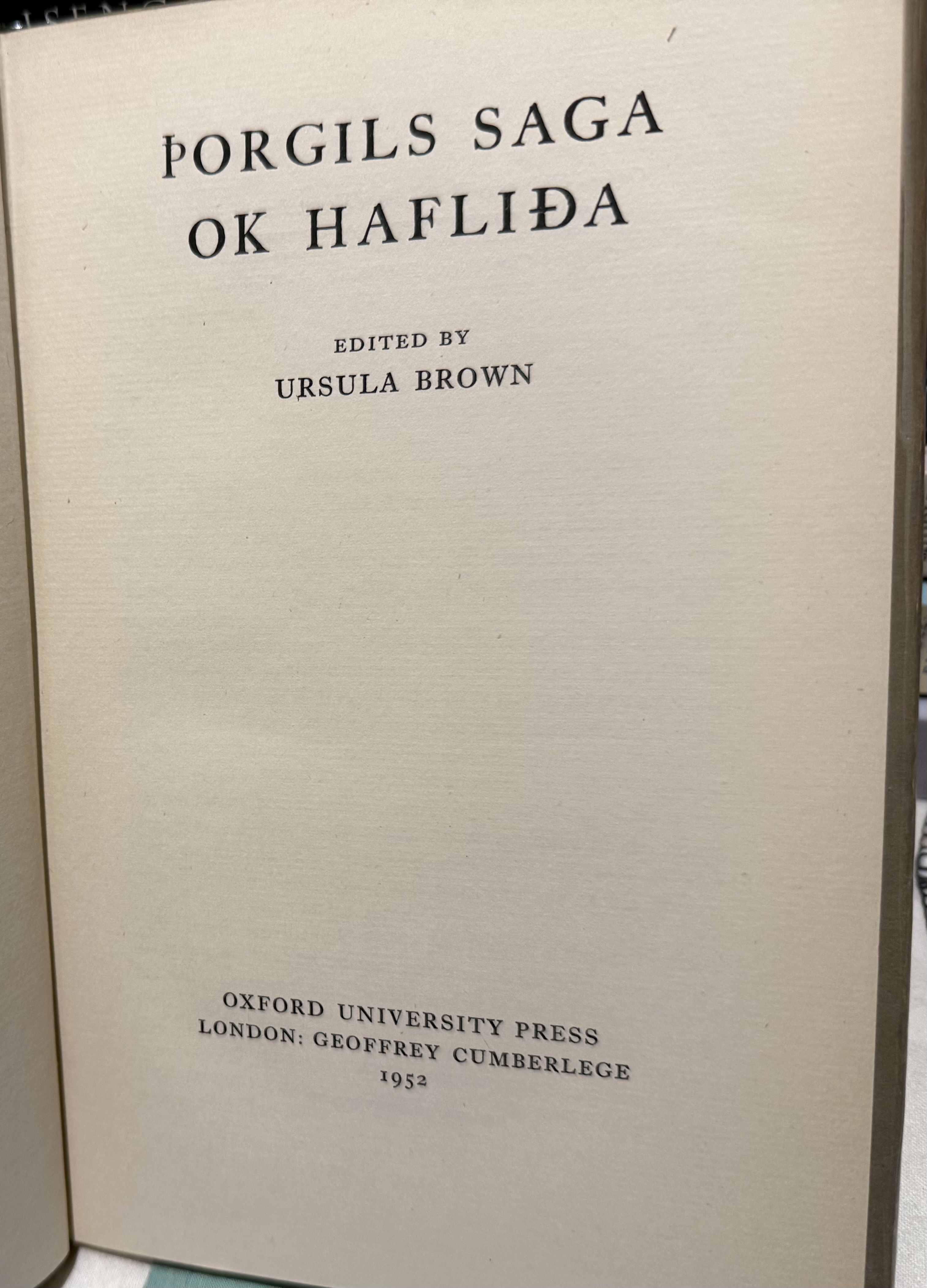
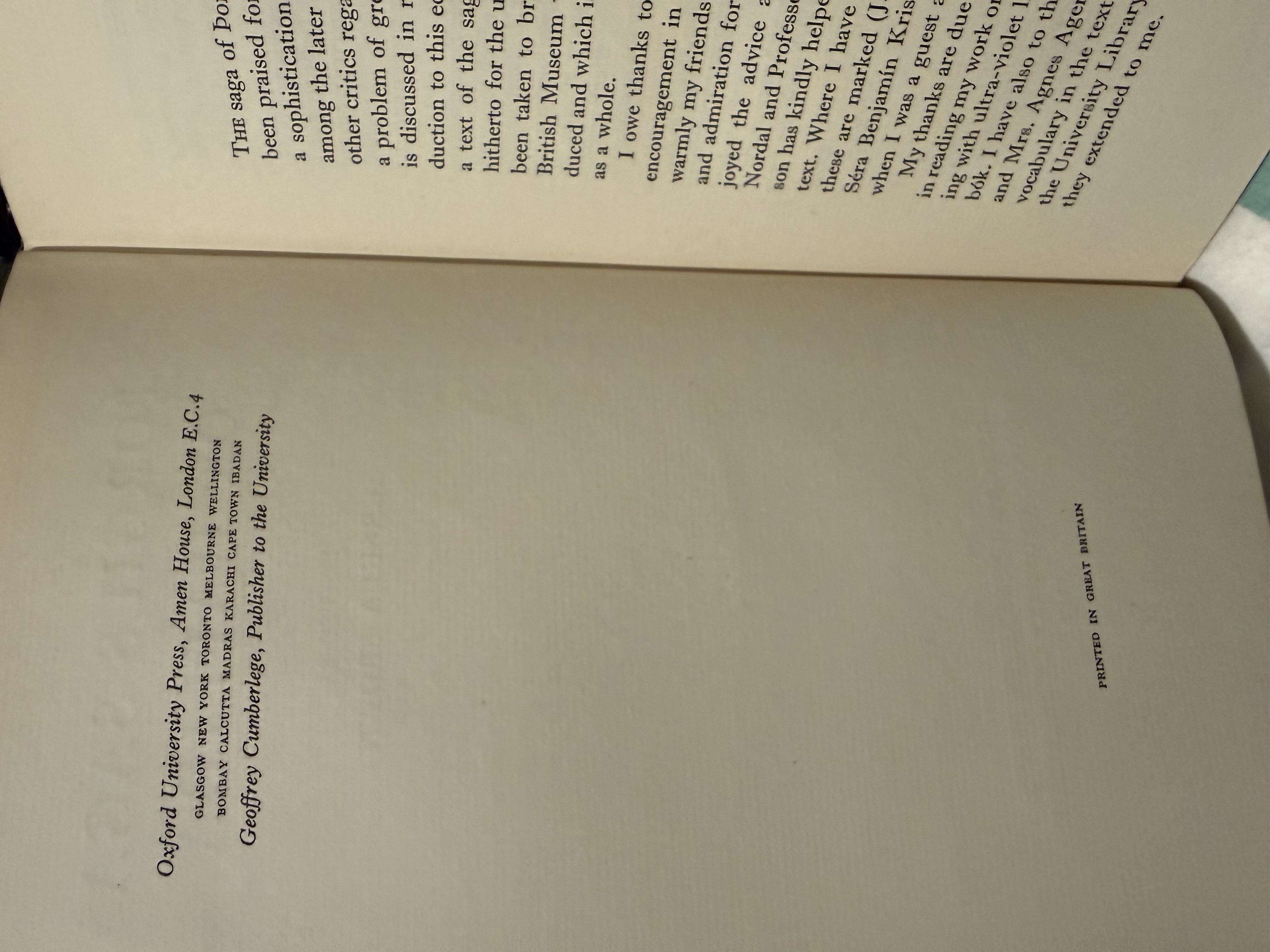
First Edition Title & Copyright Pages
Sir Orfeo (1954)
Forth in the series, edited by A.J. Bliss, a Middle English literary edition. This is an edition of the Middle English romance Sir Orfeo, a retelling of the Orpheus legend within an Arthurian-flavored medieval setting. These texts illuminate how classical material was adopted and adapted in medieval English literary culture. A second edition was published in the 1960's with an altered dust jacket and corrections to the text. Another paperback edition was published as well.
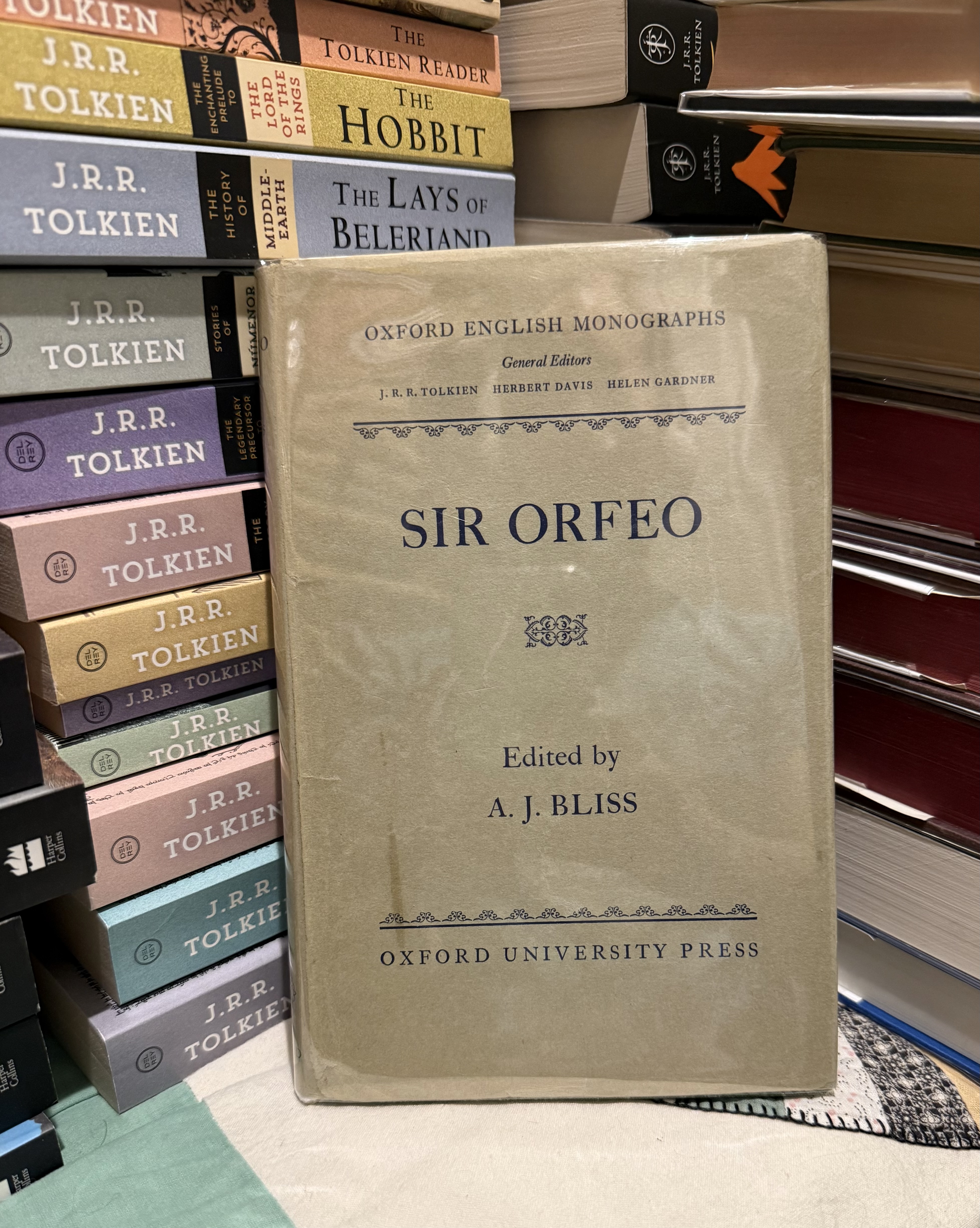
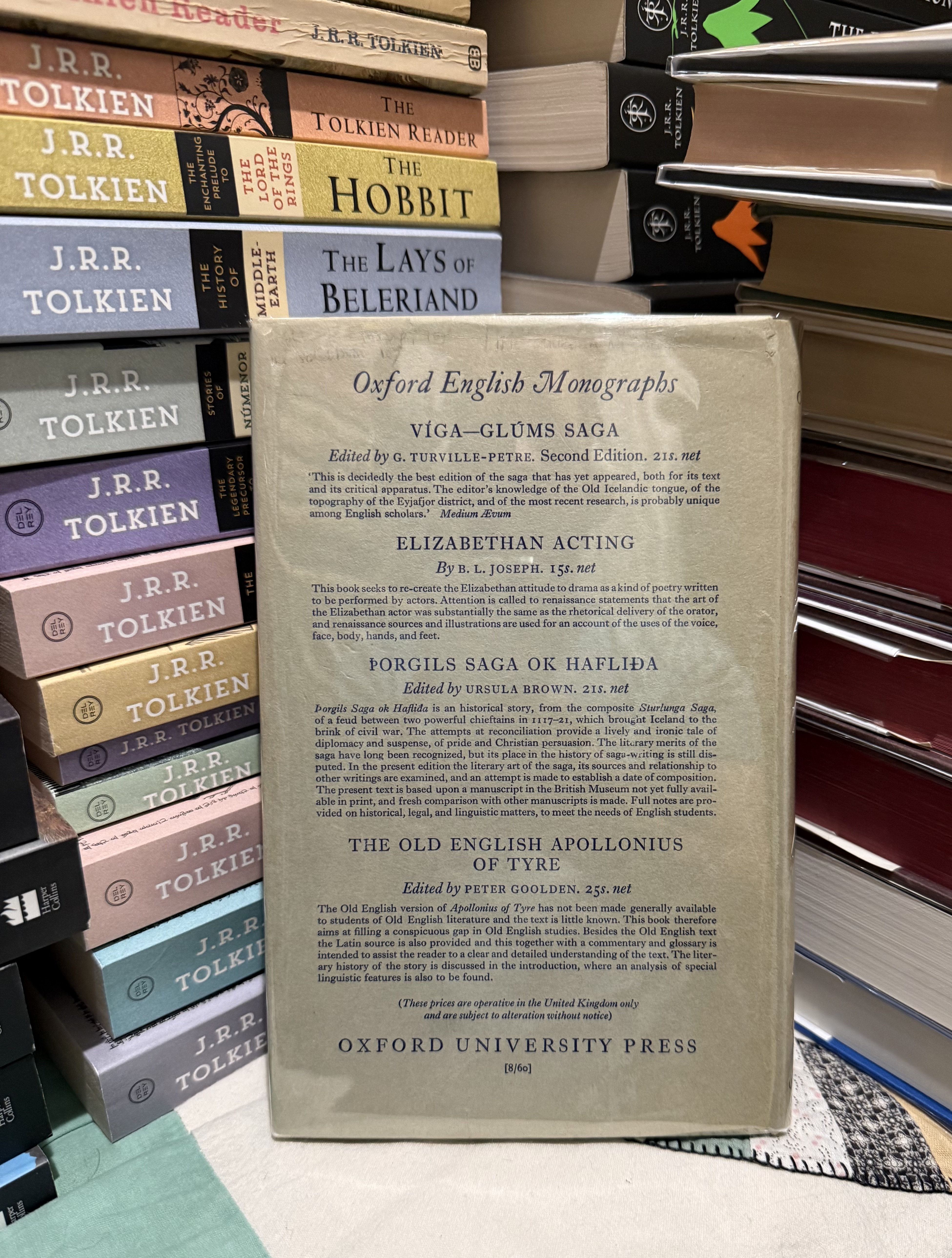
First Edition
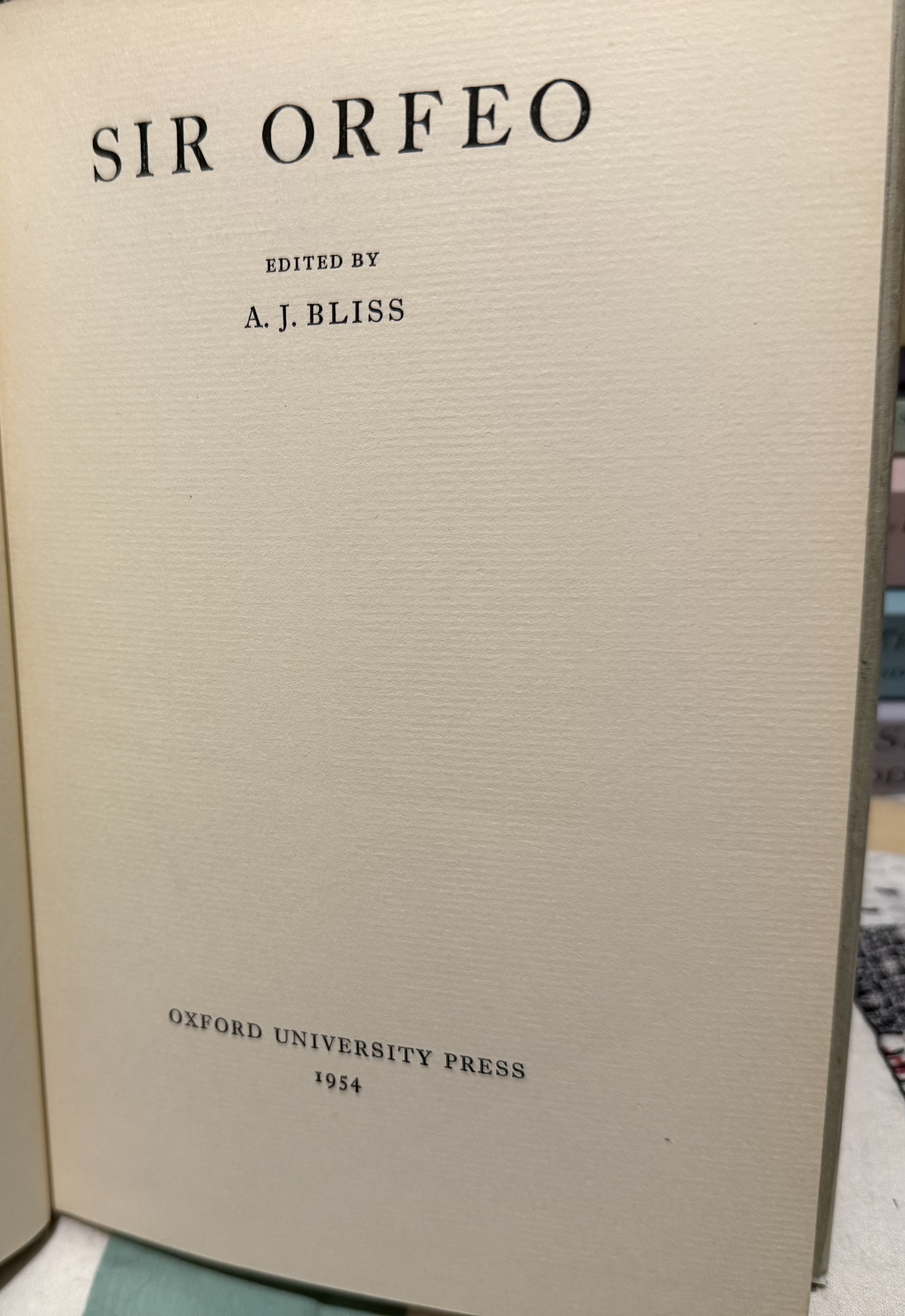
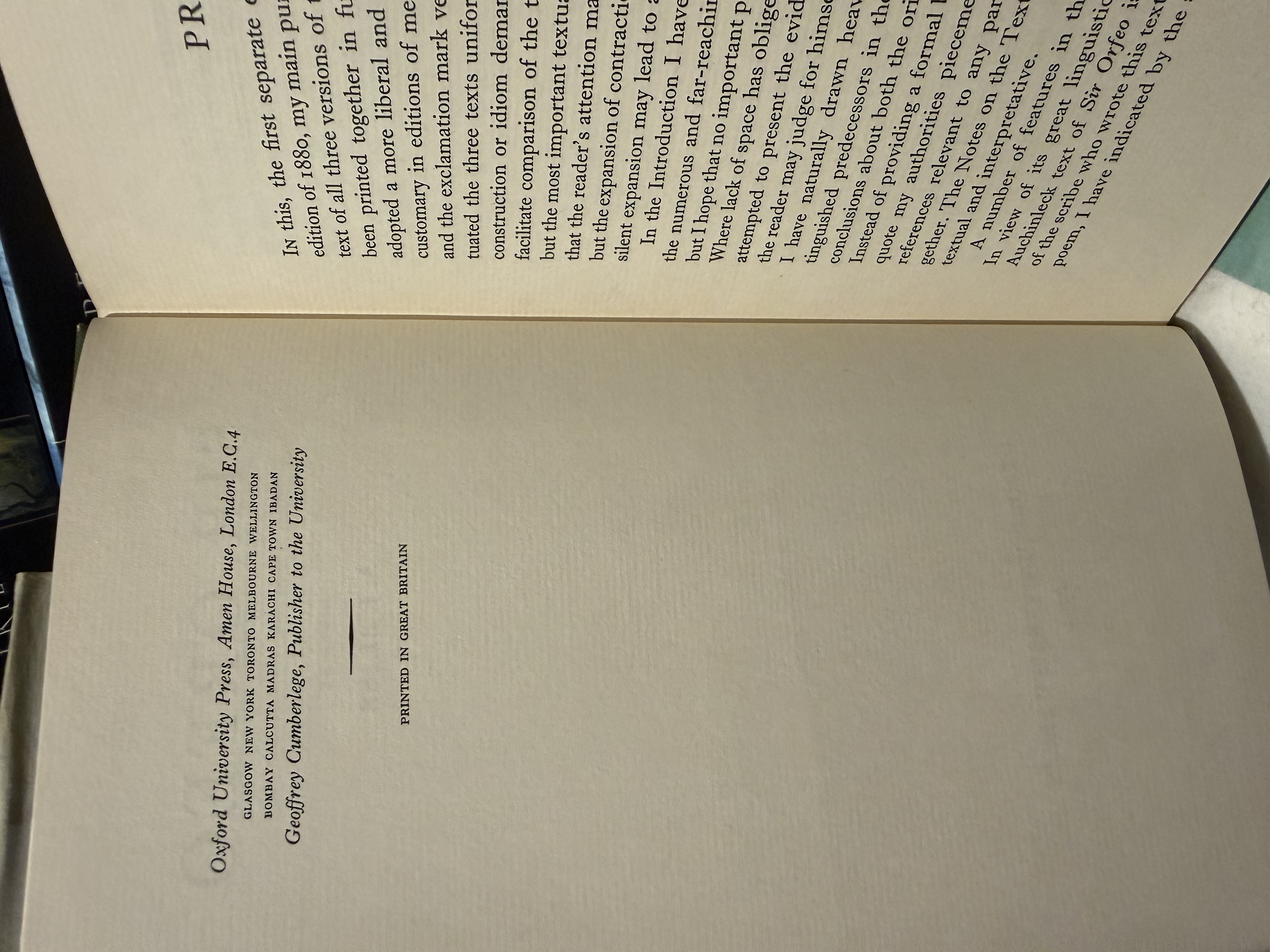
First Edition Title & Copyright Pages
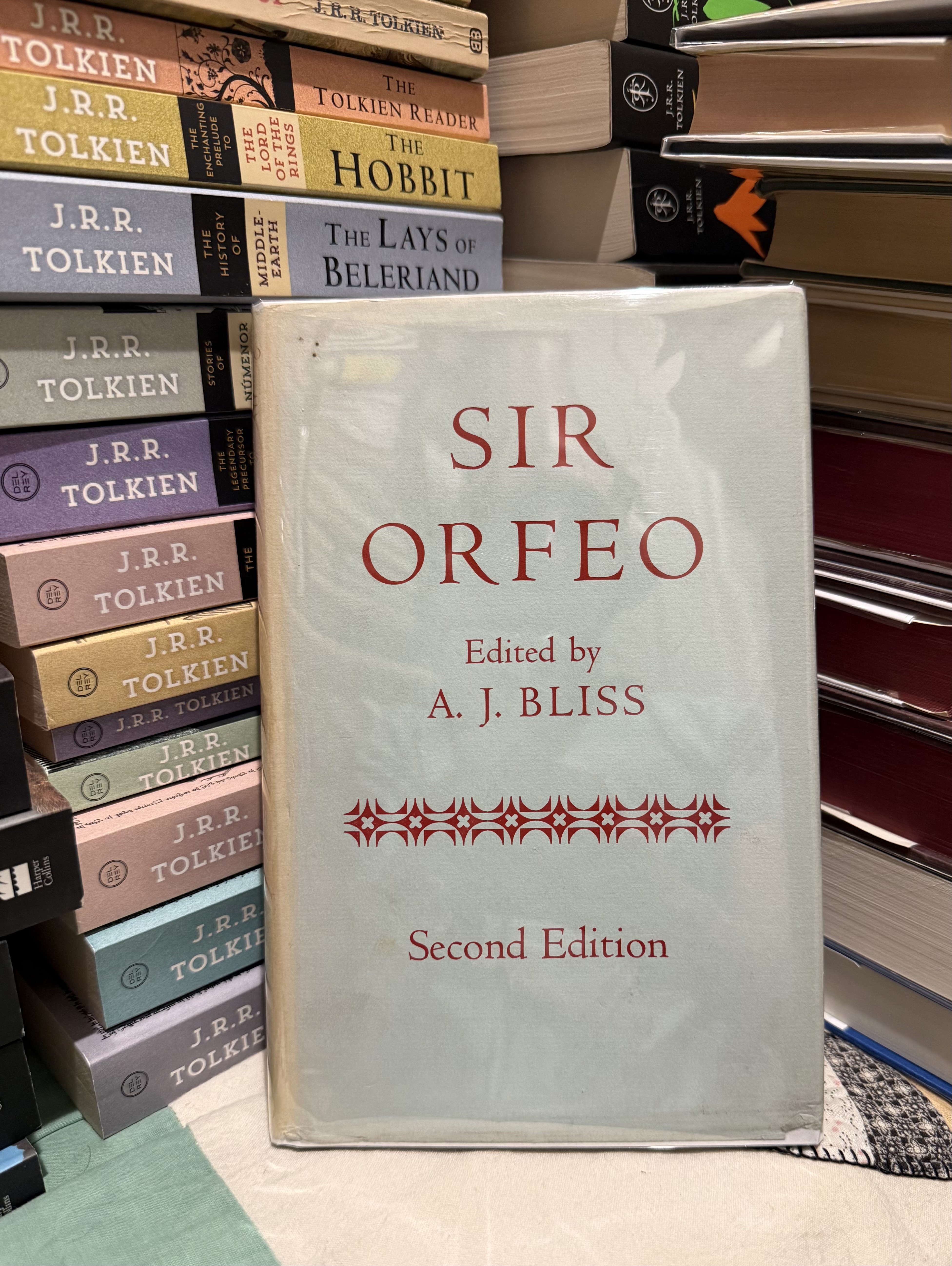
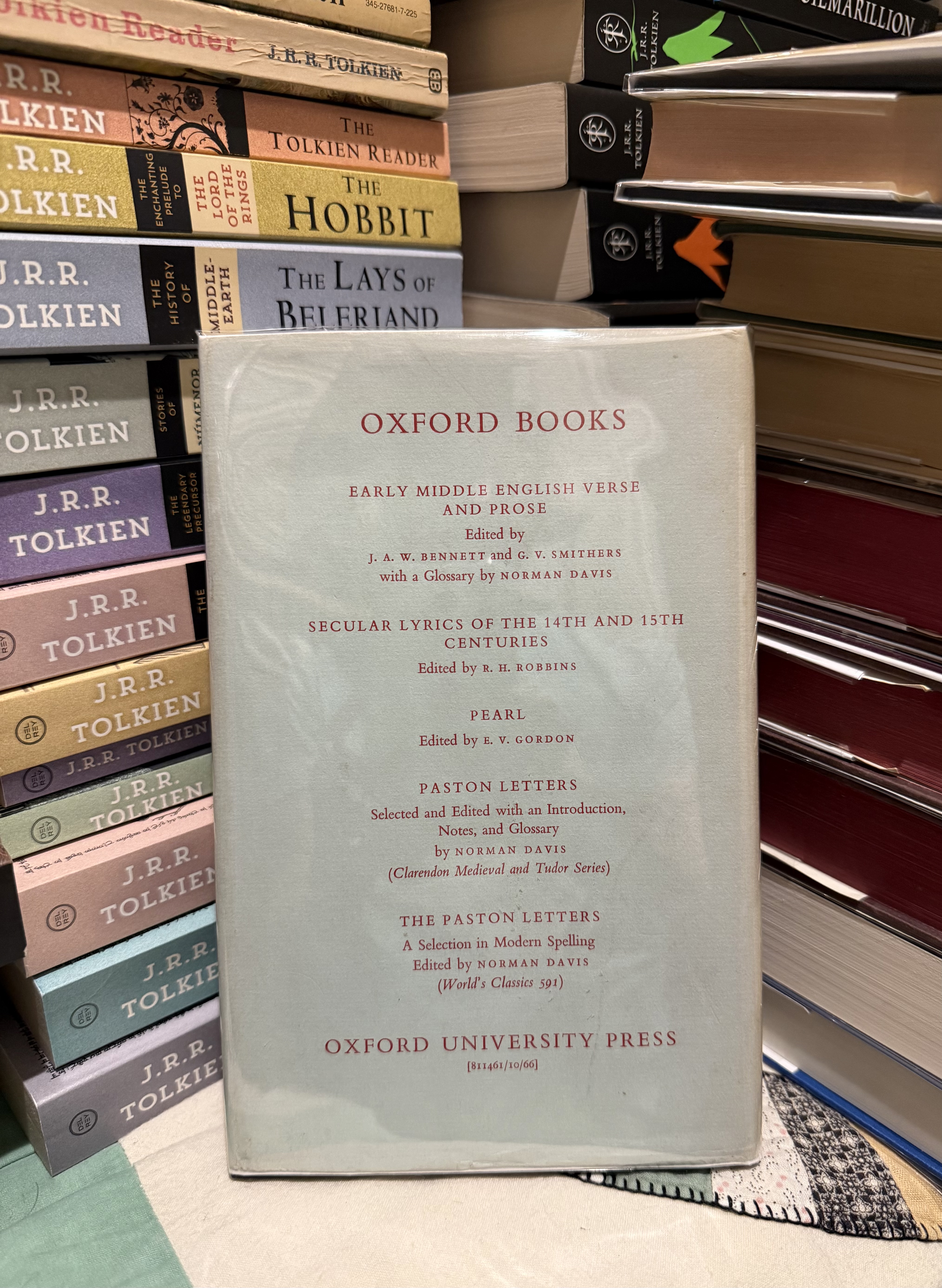
Second Hardback Edition
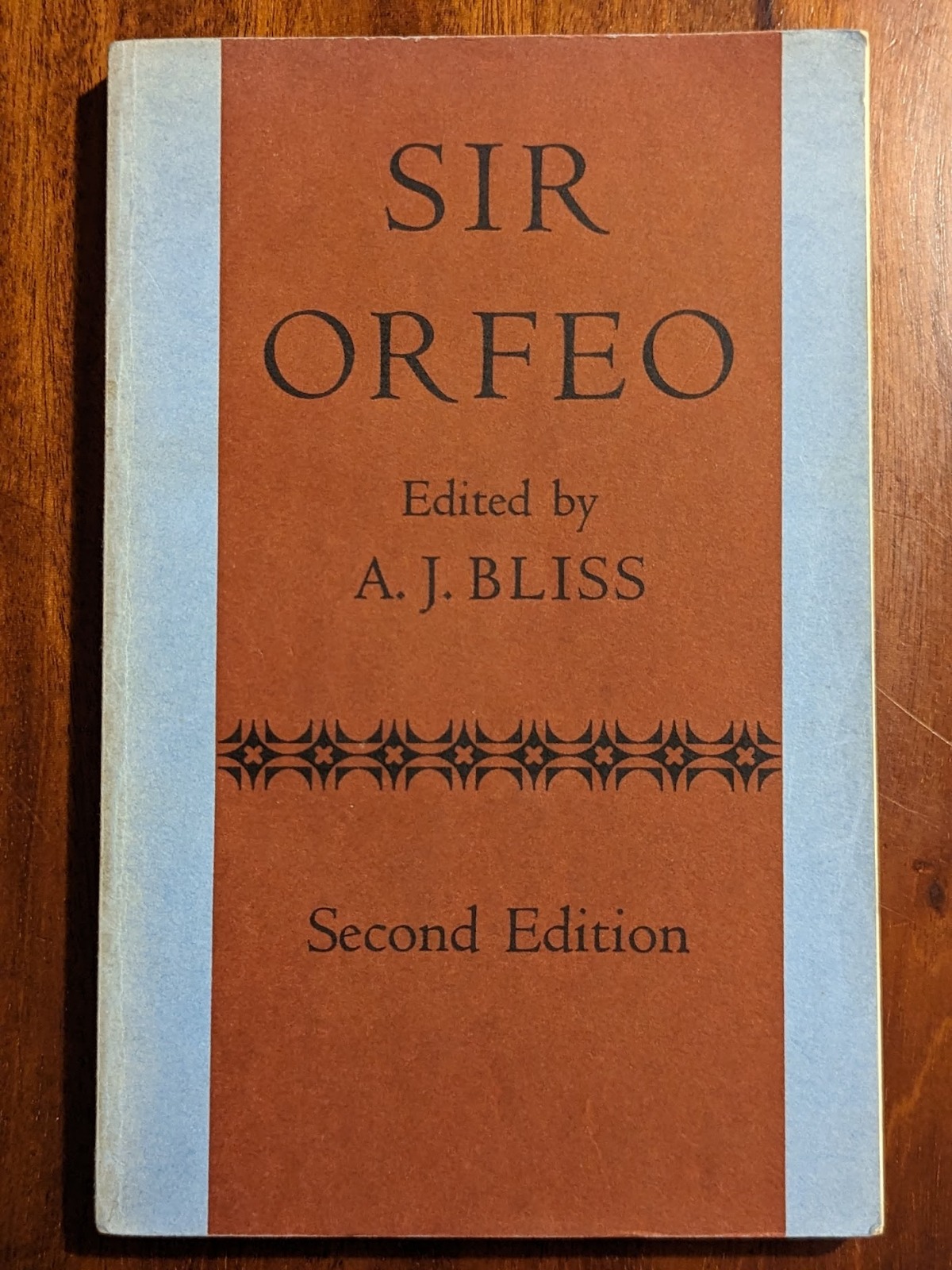
Second Paperback Edition. Image courtesy of remy
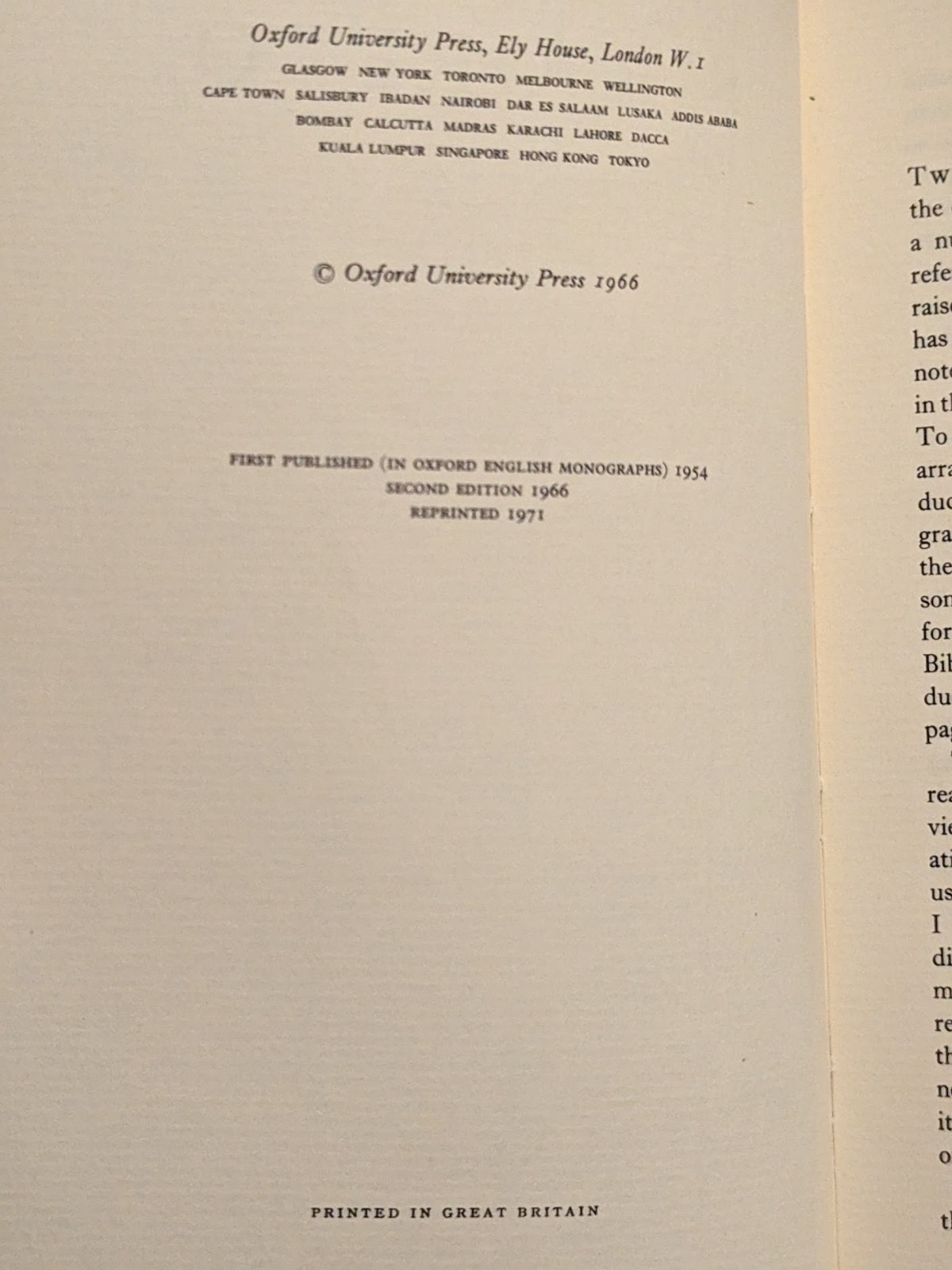
Second Paperback Edition Copyright Page. Image courtesy of remy
The Peterborough Chronicle (1958)
Fifth in the series, edited by Cecily Clark and is an edition of an Anglo-Saxon Chronicle continuation. A scholarly edition of the continuation of the Anglo-Saxon Chronicle preserved in the Peterborough manuscript. This text is a key historical source for late Anglo-Saxon and early Norman England and is widely used in studies of early English history and language.
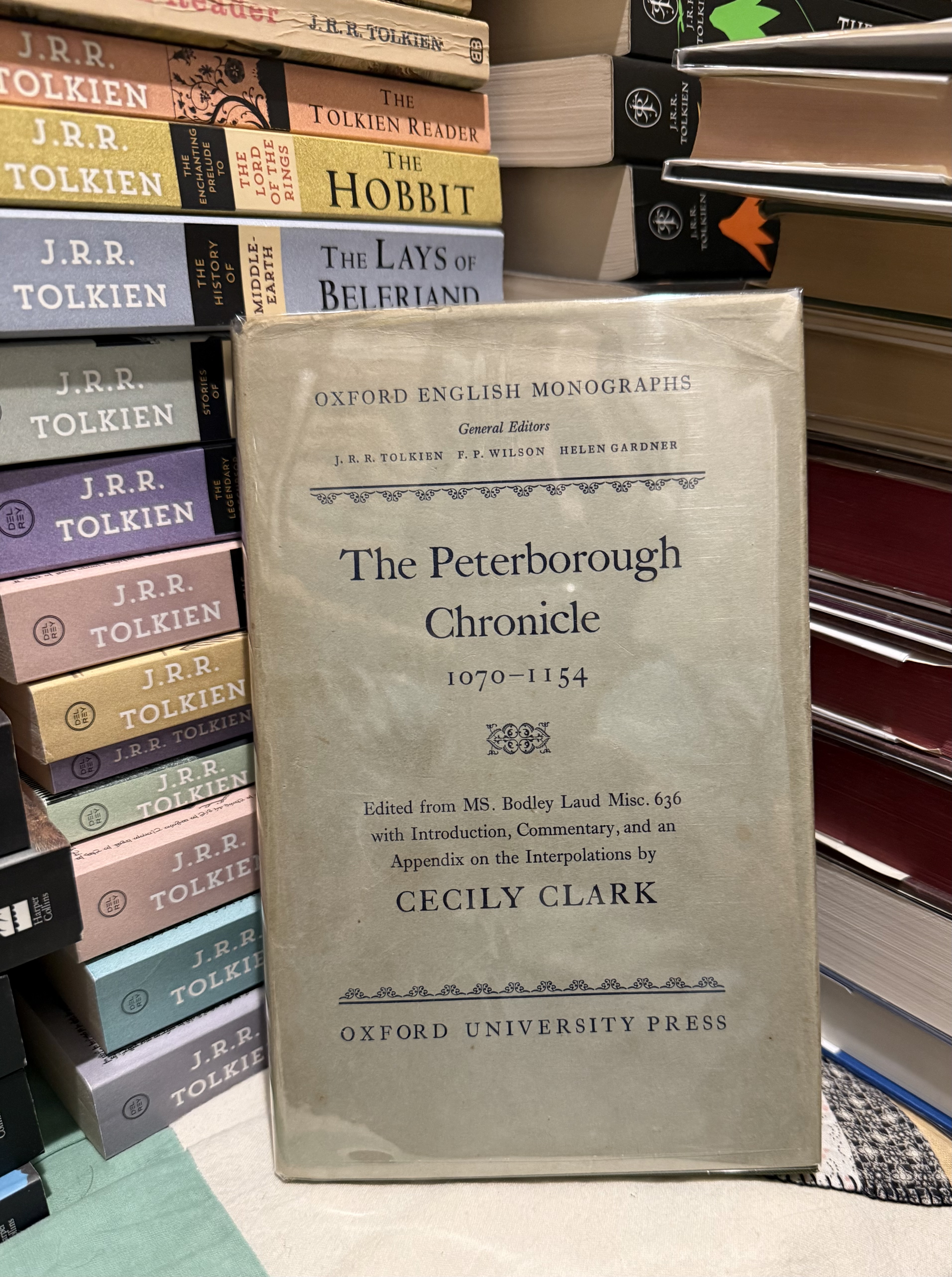
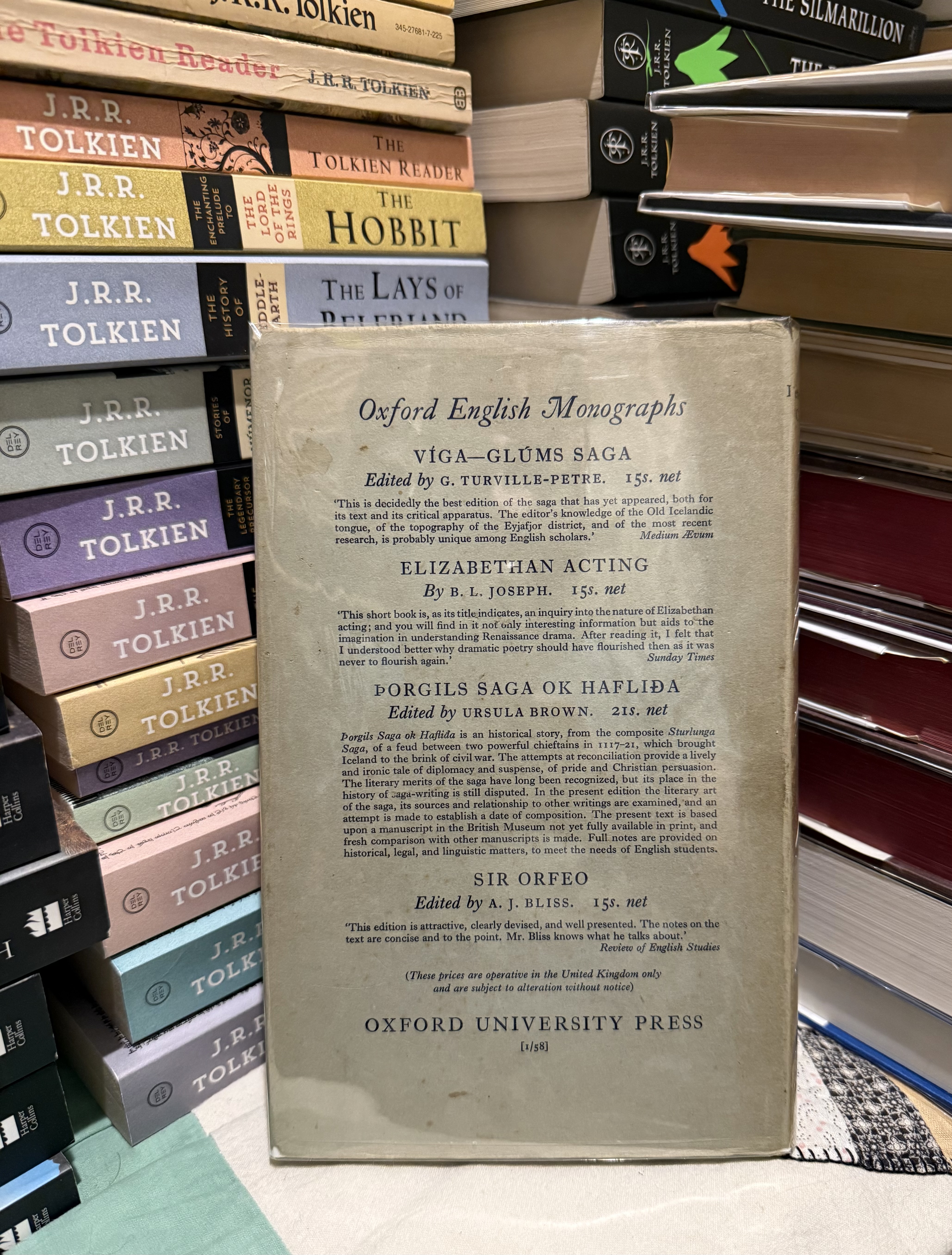
First Edition
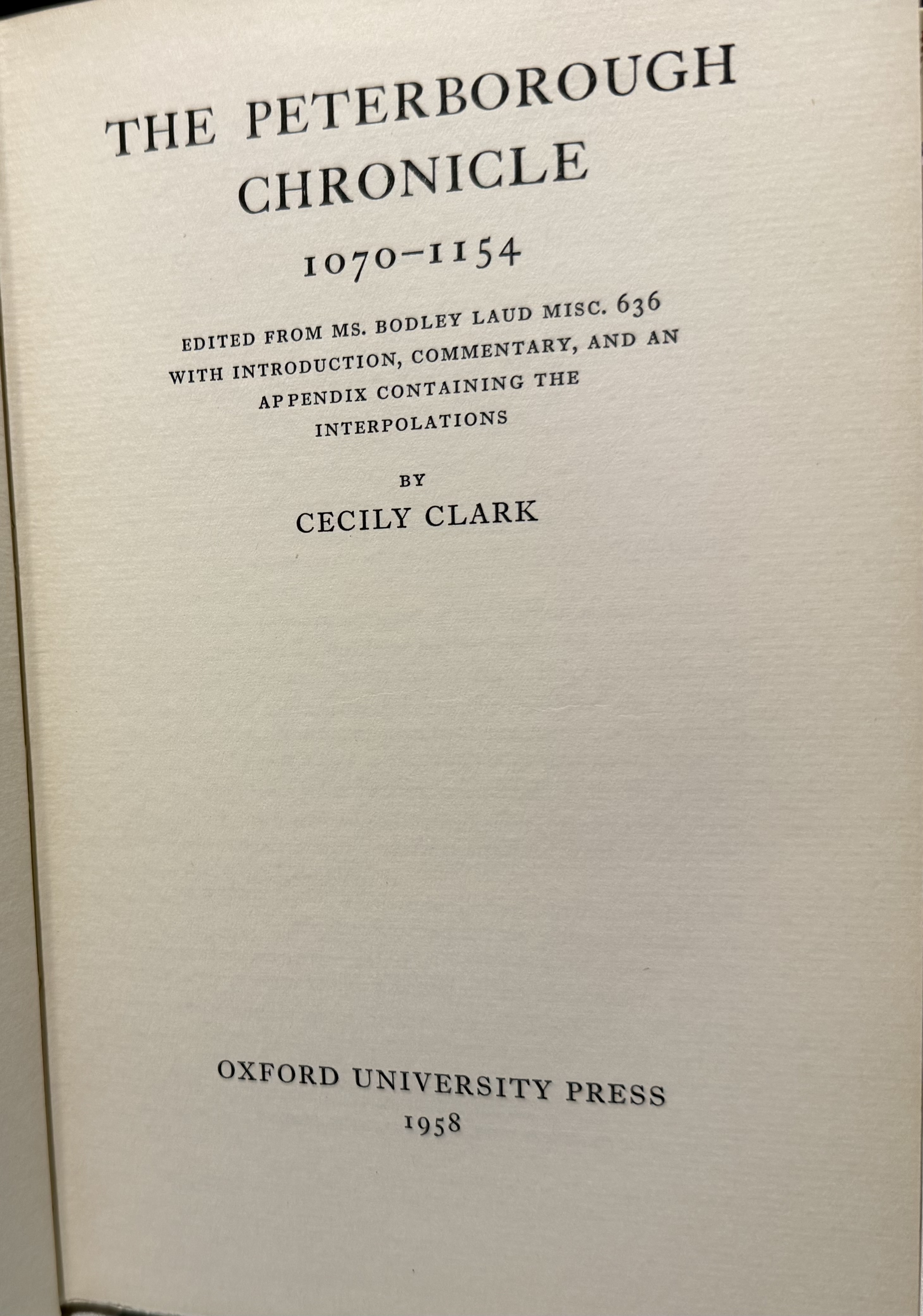
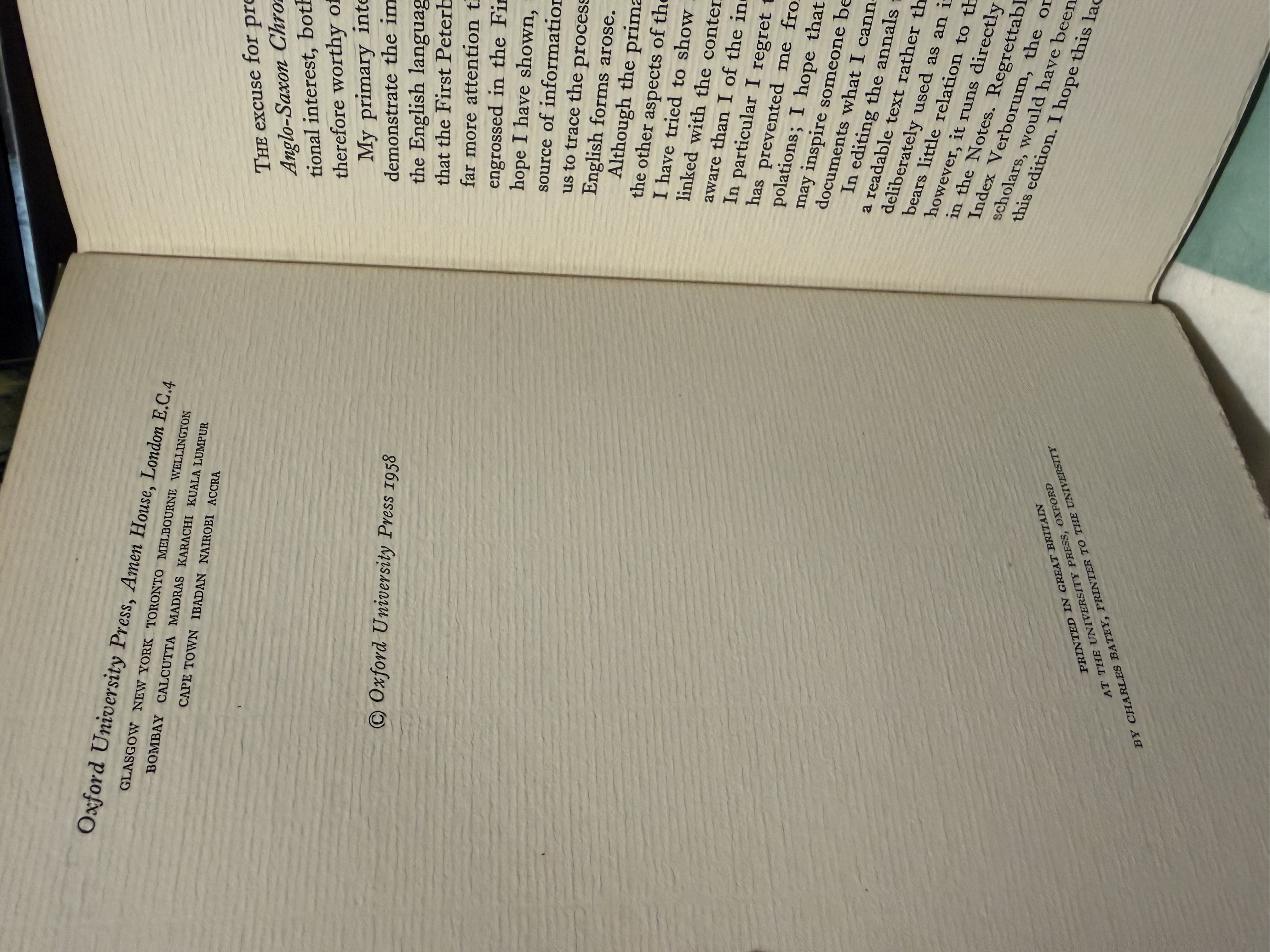
First Edition Title & Copyright Pages
The Old English Apollonius of Tyre (1958)
Sixth in the series (and by my account the hardest to find), edited by Peter Goolden and is an edition of the Old English version of the medieval romance Apollonius of Tyre, a narrative story that circulated widely across medieval Europe. Tolkien contributed a prefatory note addressing details of publication.
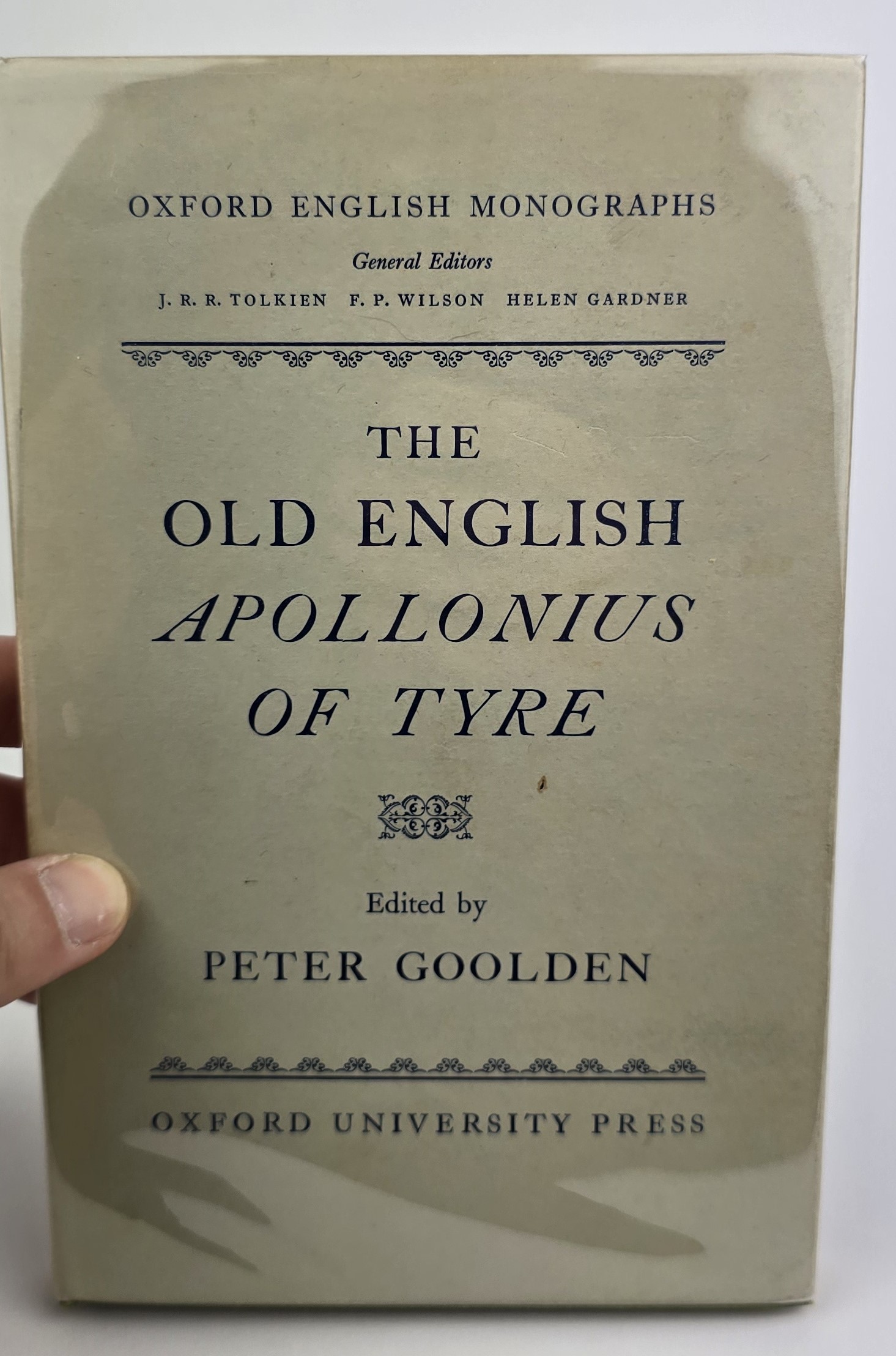
First Edition. Image courtesy of Beren
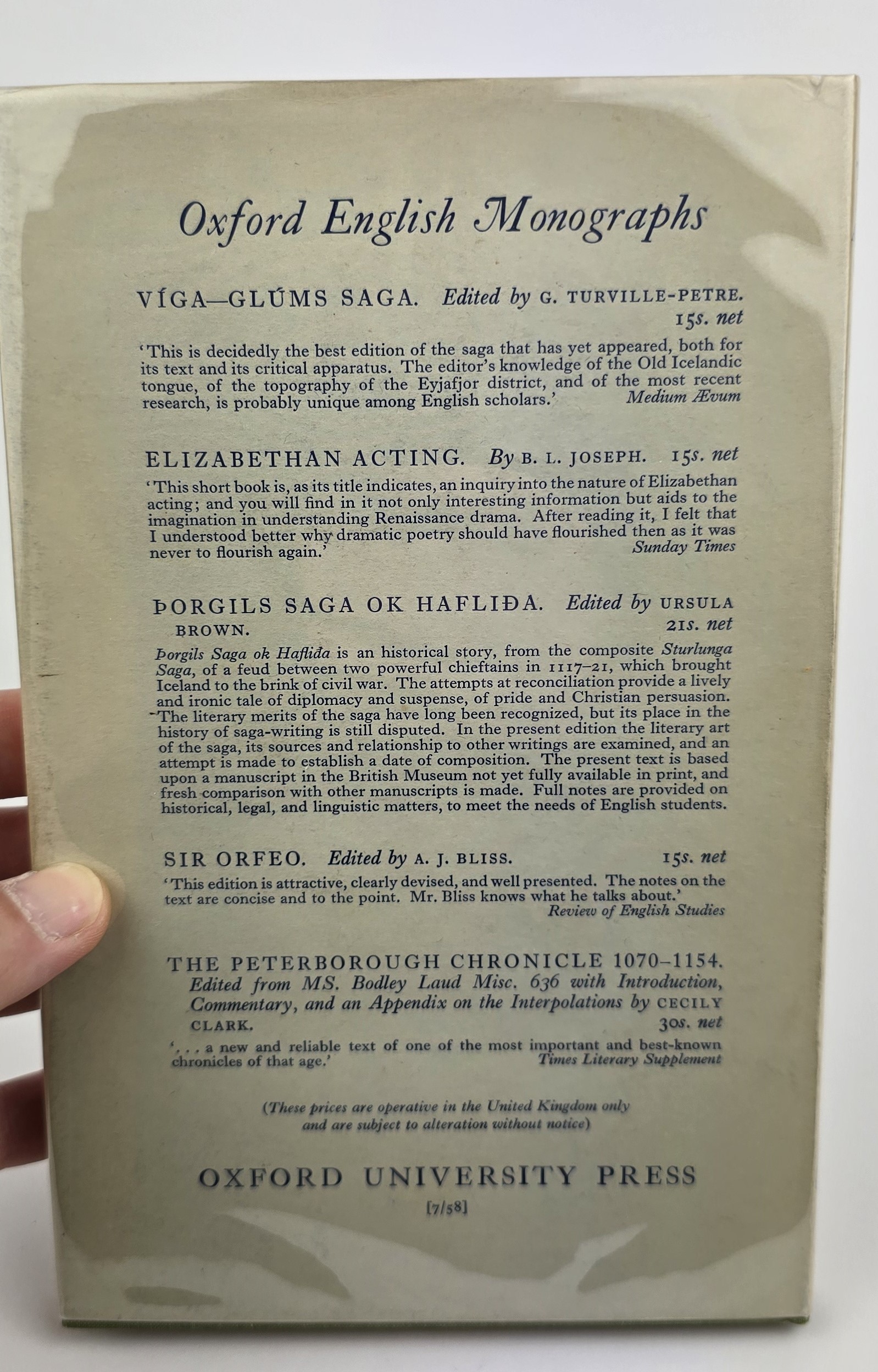
First Edition. Image courtesy of Beren
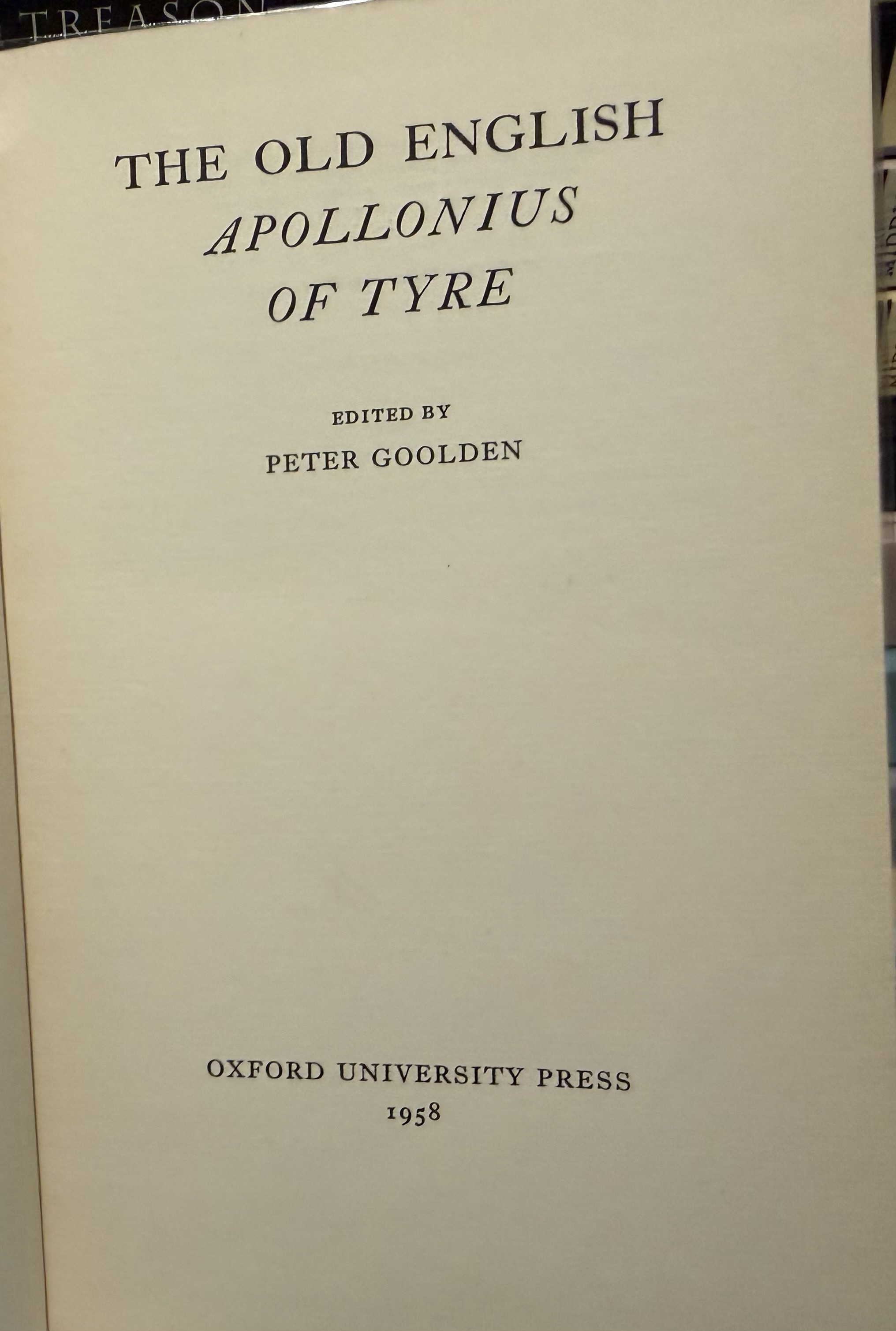
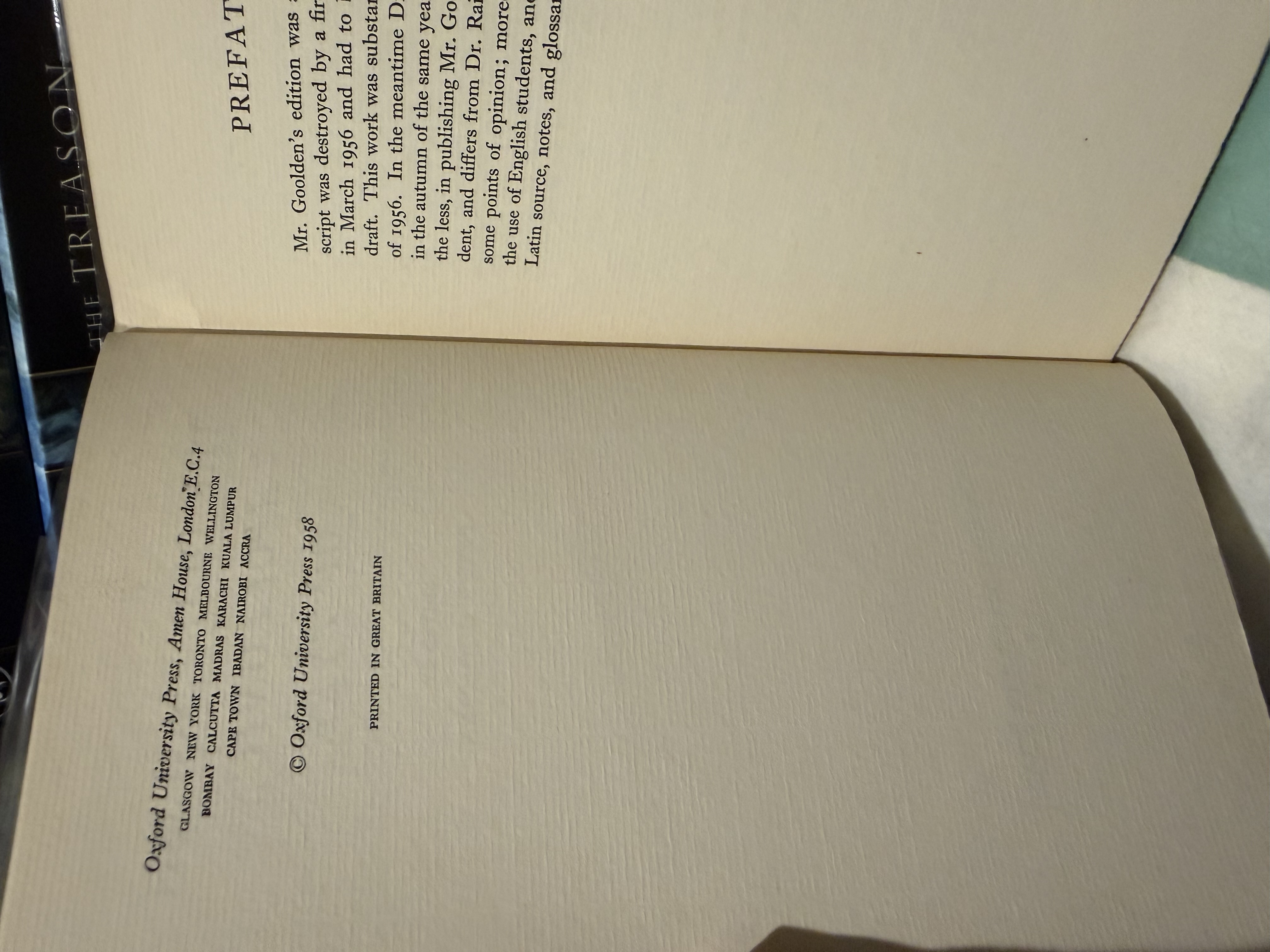
First Edition Title & Copyright Pages
The Sonnets of William Alabaster (1959)
Seventh in the series, edited by G. M. Story & Helen Gardner. This is an Critical edition of the Latin sonnets of William Alabaster (late 16th–early 17th c.), a poet and theological writer whose work forms part of Renaissance English literary history. Tolkien’s editorial connection here marks the end of his involvement with the Oxford English Monographs series as he would shortly retire from his chair at Oxford at the age of 67.
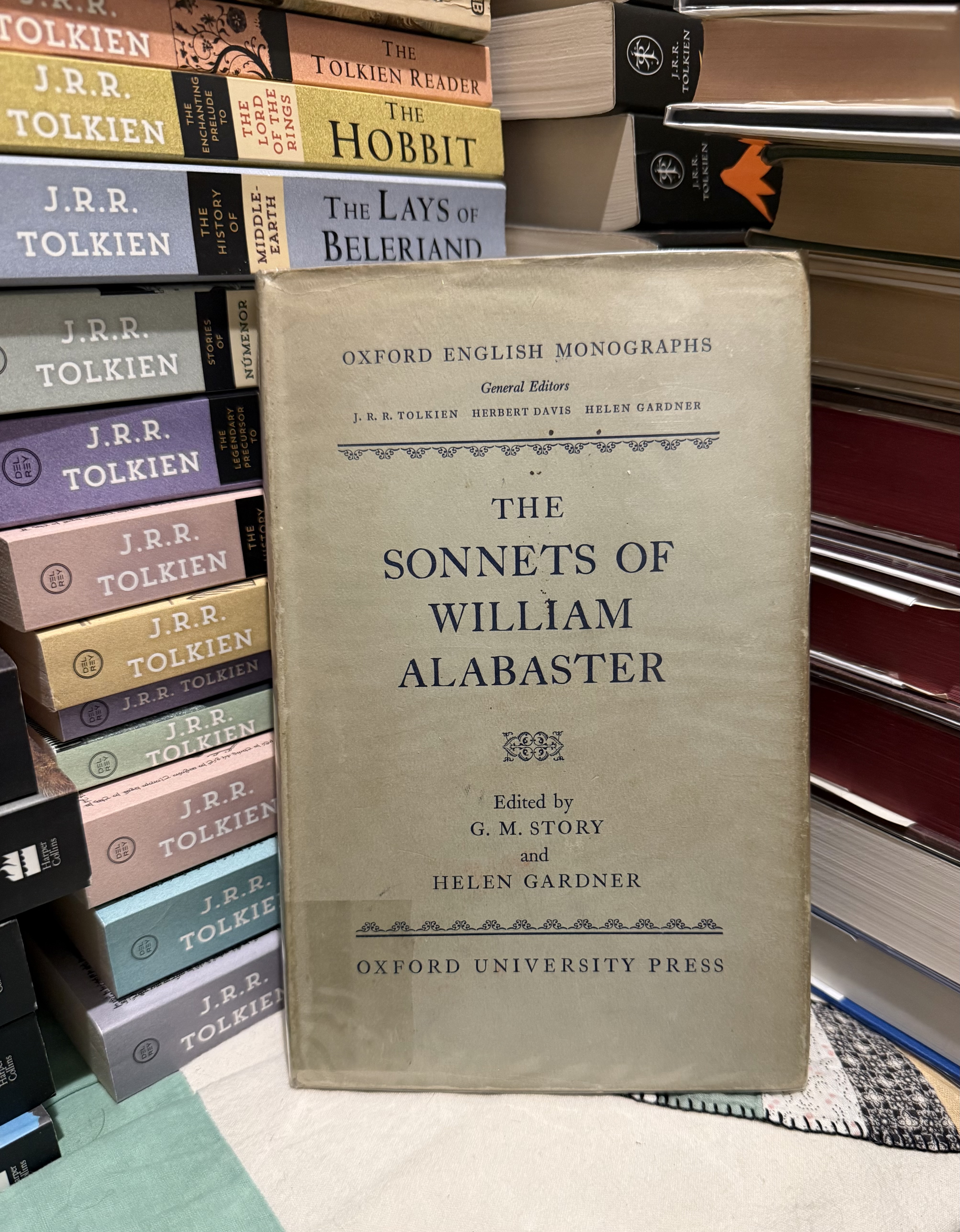
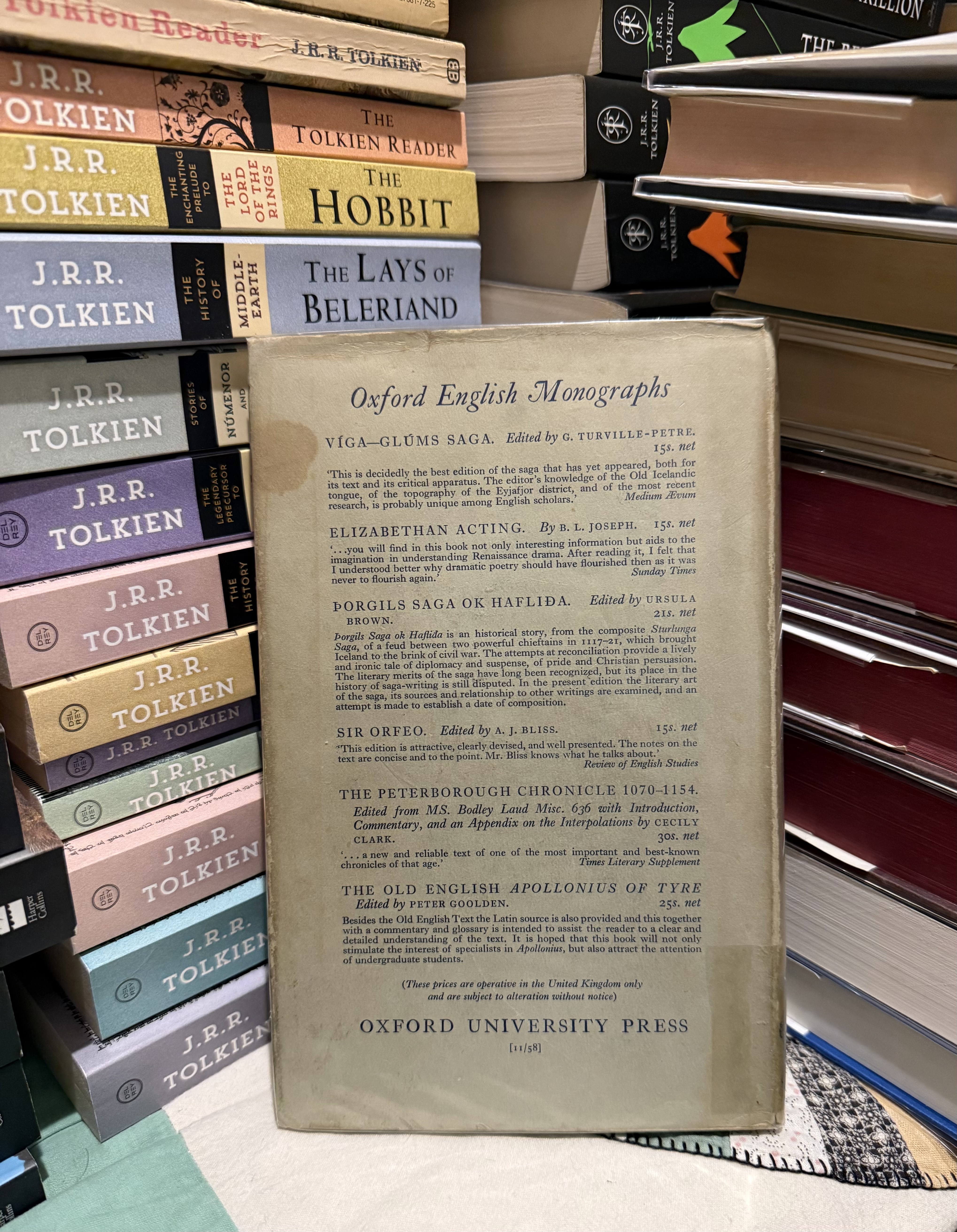
First Edition
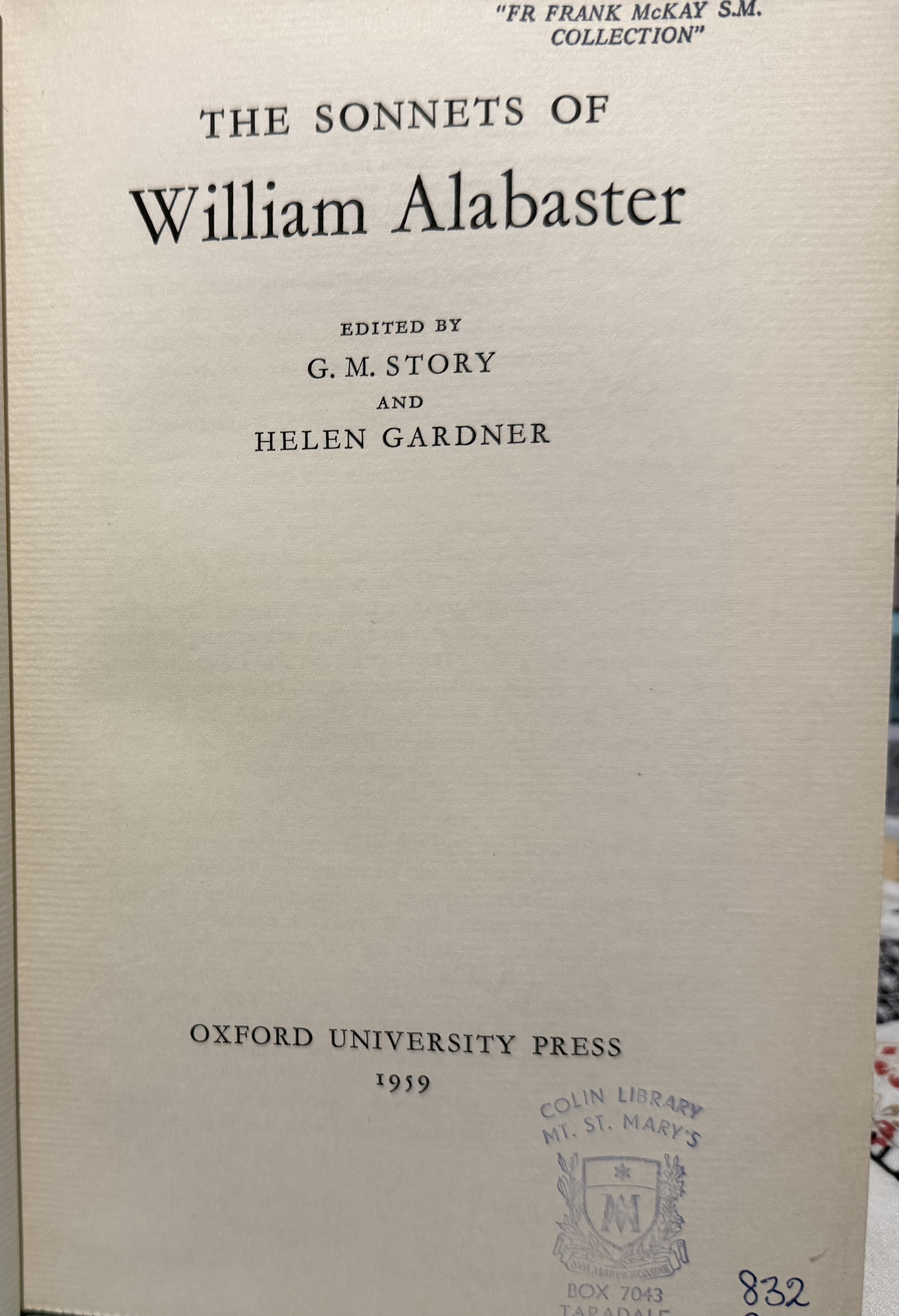
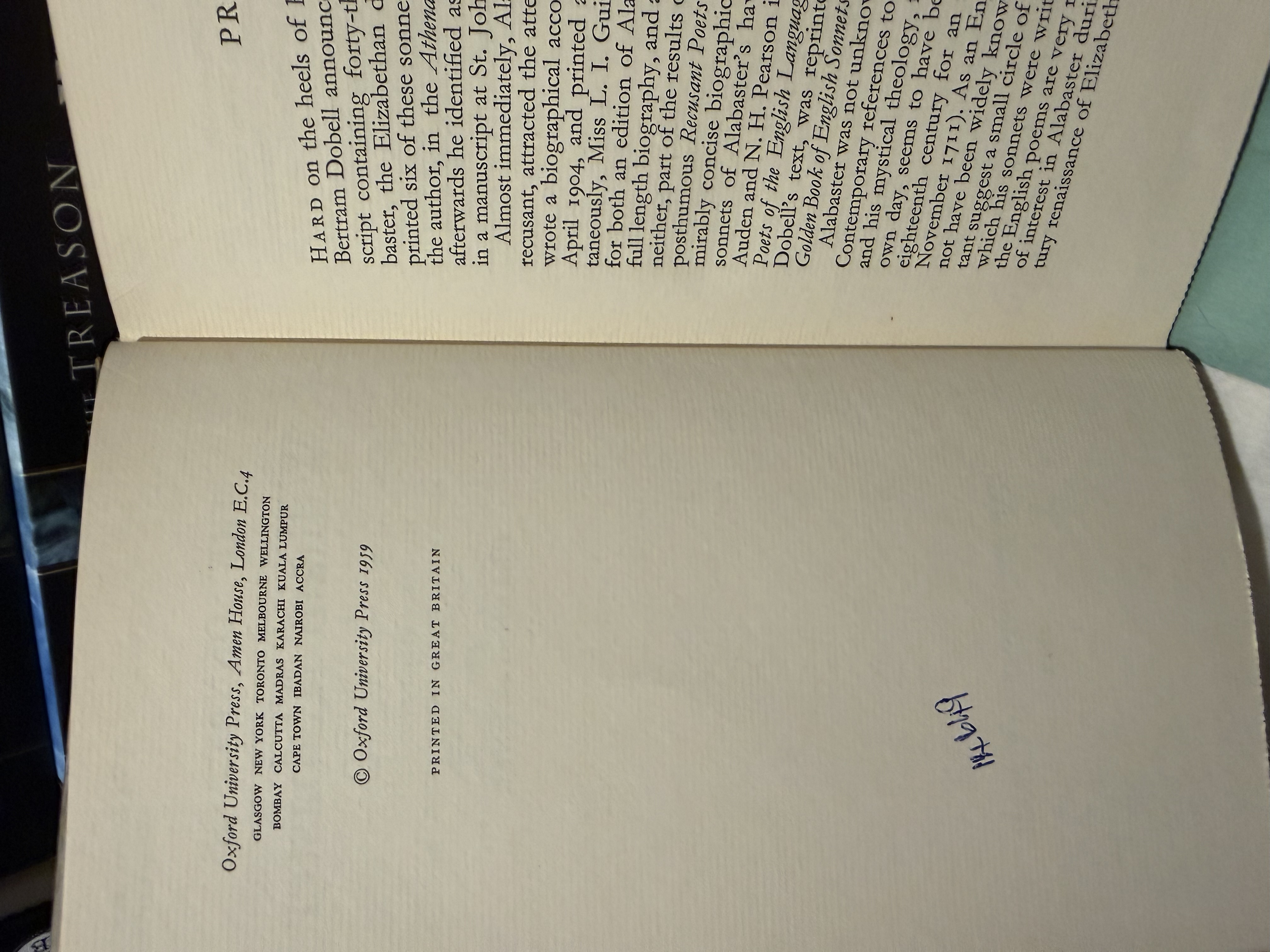
First Edition Title & Copyright Pages
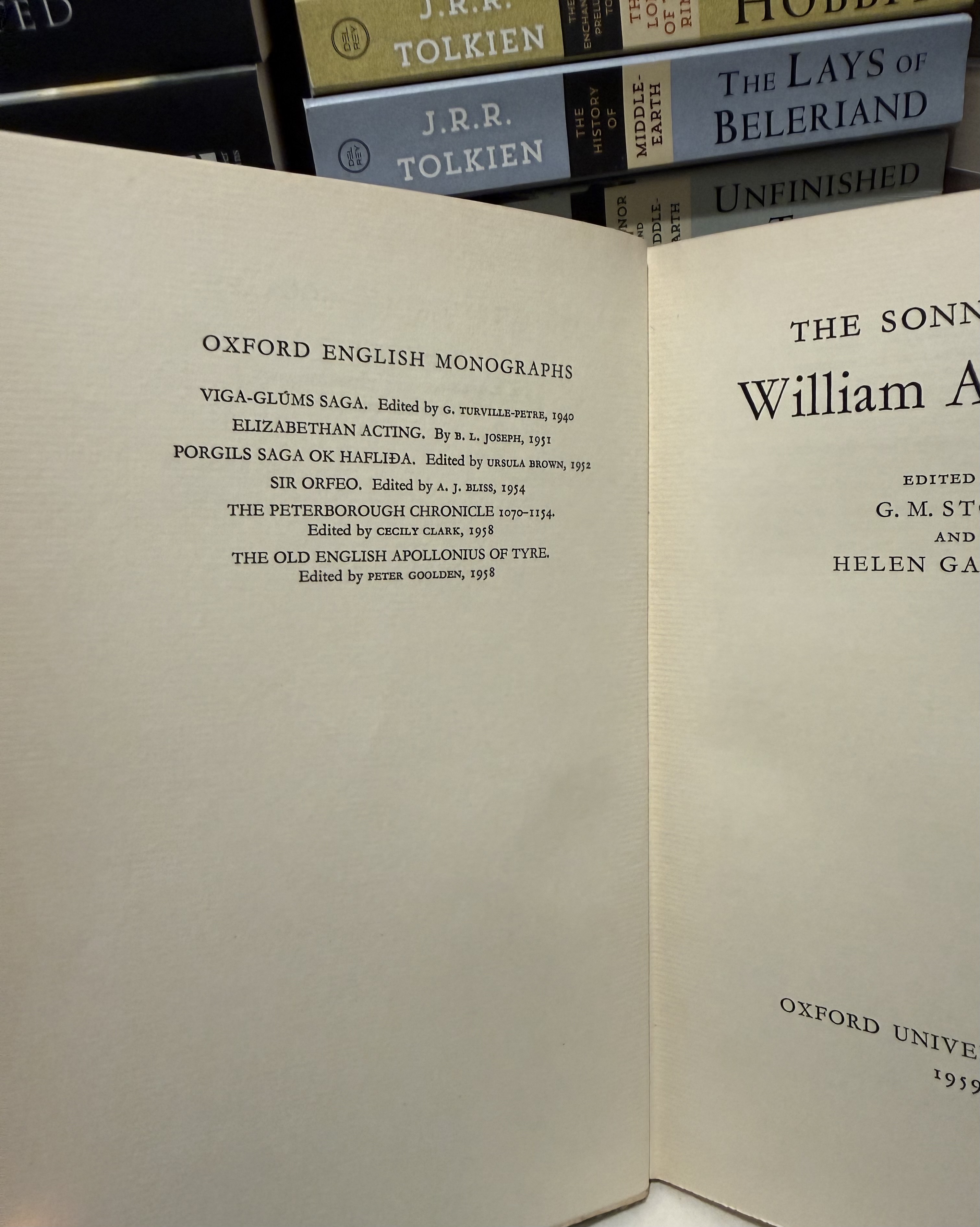
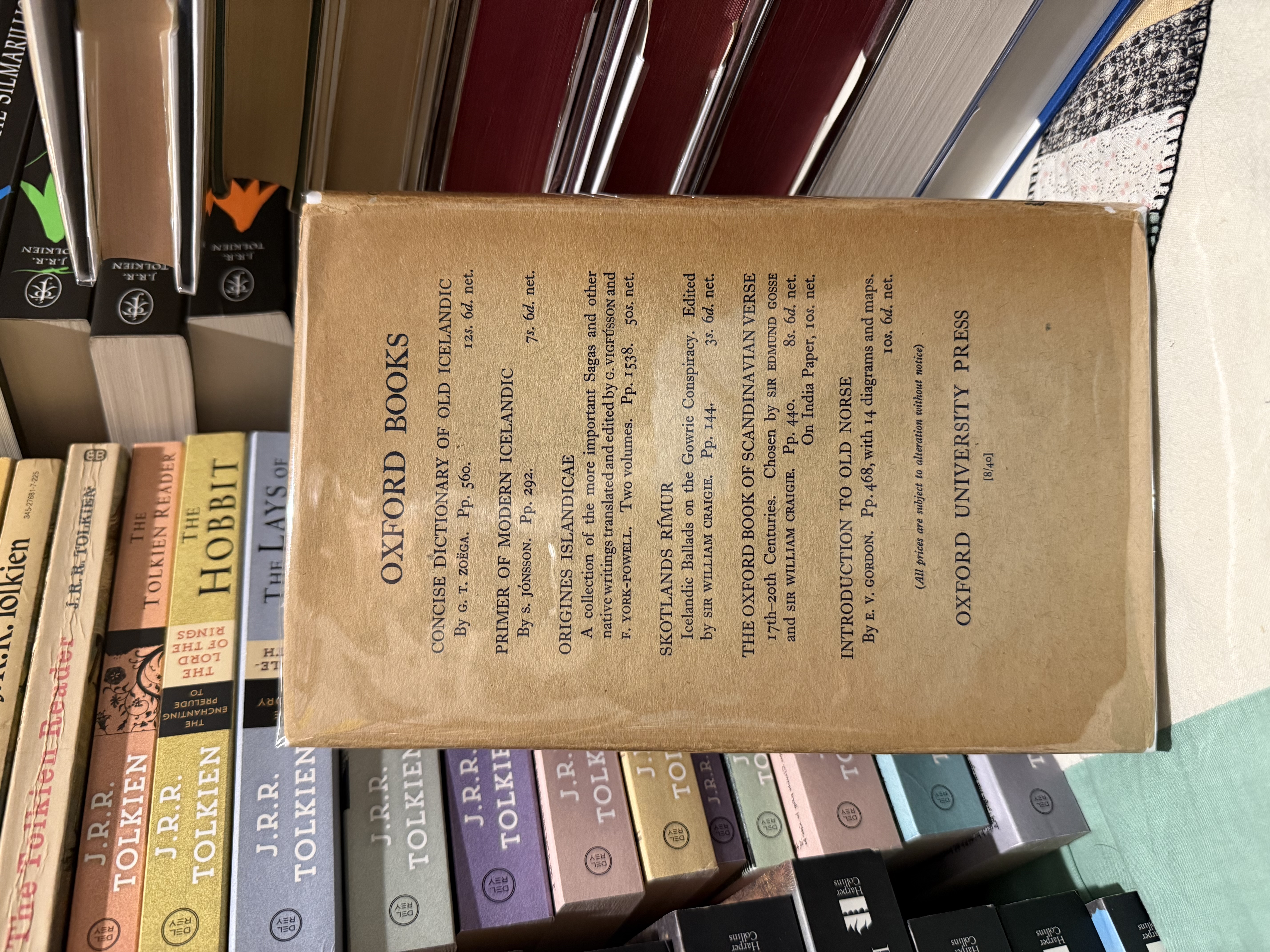
Listing of all other titles in the final volume.
Review, and Advance Reading Copies
By the 1940s, many academic and trade publishers (including major university presses like OUP) were using advance copies to solicit reviews in journals, newspapers, and scholarly publications before a book appeared. the typical groups receiving such copies included: Book reviewers and critics in newspapers, magazines, and academic journals. Booksellers and distributors who could order stock based on early reviews. Academic libraries and scholars likely to adopt and recommend the book in their fields. Librarians and institutional buyers who would evaluate new academic titles for their collections.
These typically came with some sort of documentation to indicate the volume was being sent for this purpose. I have many such copies in my collection.
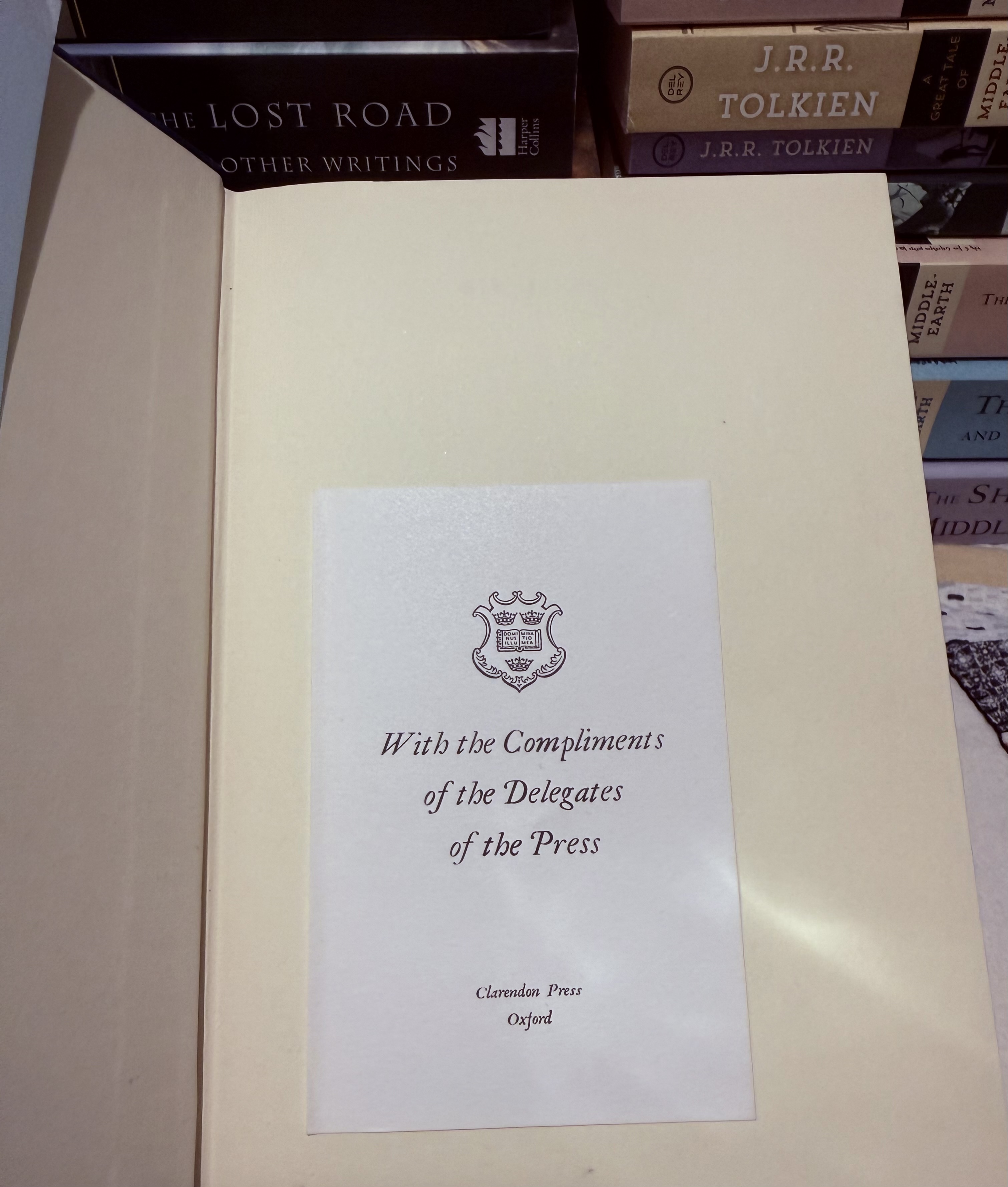
Review/Courtesy Slip
Conclusions
This series and Tolkien’s involvement, I feel, reveal a coherent intellectual worldview that unites his academic and imaginative work. The series reflects a distinctly philological conception of English studies—one grounded in the careful establishment of texts, attention to linguistic history, and respect for manuscript transmission.
Its emphasis on Old Norse sagas, Anglo-Saxon chronicles, Middle English romance, and early modern scholarship demonstrates a belief in deep historical continuity, treating English literature not as a modern, isolated phenomenon but as part of a long cultural and linguistic inheritance. This same sensibility shapes Tolkien’s fiction. The Lord of the Rings is structured like a recovered text, embedded in layers of history, languages, and lost records, mirroring the scholarly editions he helped oversee.
His narrative world behaves like a medieval archive, complete with transmission, variation, and antiquity. The monograph series therefore illustrates that Tolkien’s myth-making was not separate from his scholarship; rather, his fiction can be understood as philology transformed into imaginative sub-creation, applying the methods and values of historical scholarship to the construction of an invented but internally coherent past.
For more information & Works Consulted
1. J.R.R. Tolkien A Descriptive Bibliography - Wayne G. Hammond with the assistance of Douglas A. Anderson (Oak Knoll)
2. Turville-Petre, Thorlac. The Alliterative Revival. Woodbridge: Brewer etc., 1977. pp. 126–129.
3. Christina Scull and Wayne G. Hammond, The J. R. R. Tolkien Companion & Guide
4. Tolkienbooks.net
5. Bliss, A. J., editor. Sir Orfeo. Oxford University Press, 1954. Oxford English Monographs.
6. Brown, Ursula, editor. Þorgils Saga ok Hafliða. Oxford University Press, 1952. Oxford English Monographs.
7. Carpenter, Humphrey, editor. The Letters of J. R. R. Tolkien. George Allen & Unwin, 1981.
8. Carpenter, Humphrey. J. R. R. Tolkien: A Biography. George Allen & Unwin, 1977.
9. Goolden, Peter, editor. Old English Apollonius of Tyre. Oxford University Press, 1958. Oxford English Monographs.
10. Joseph, B. L. Elizabethan Acting. Oxford University Press, 1951. Oxford English Monographs.
11. Story, G. M., and Helen Gardner, editors. The Sonnets of William Alabaster. Oxford University Press, 1959. Oxford English Monographs.
12. Turville-Petre, G., editor. Víga-Glúms Saga. Oxford University Press, 1940. Oxford English Monographs.
For More TolkienGuide.com articles please see
https://www.tolkienguide.com/articles/




 10
10